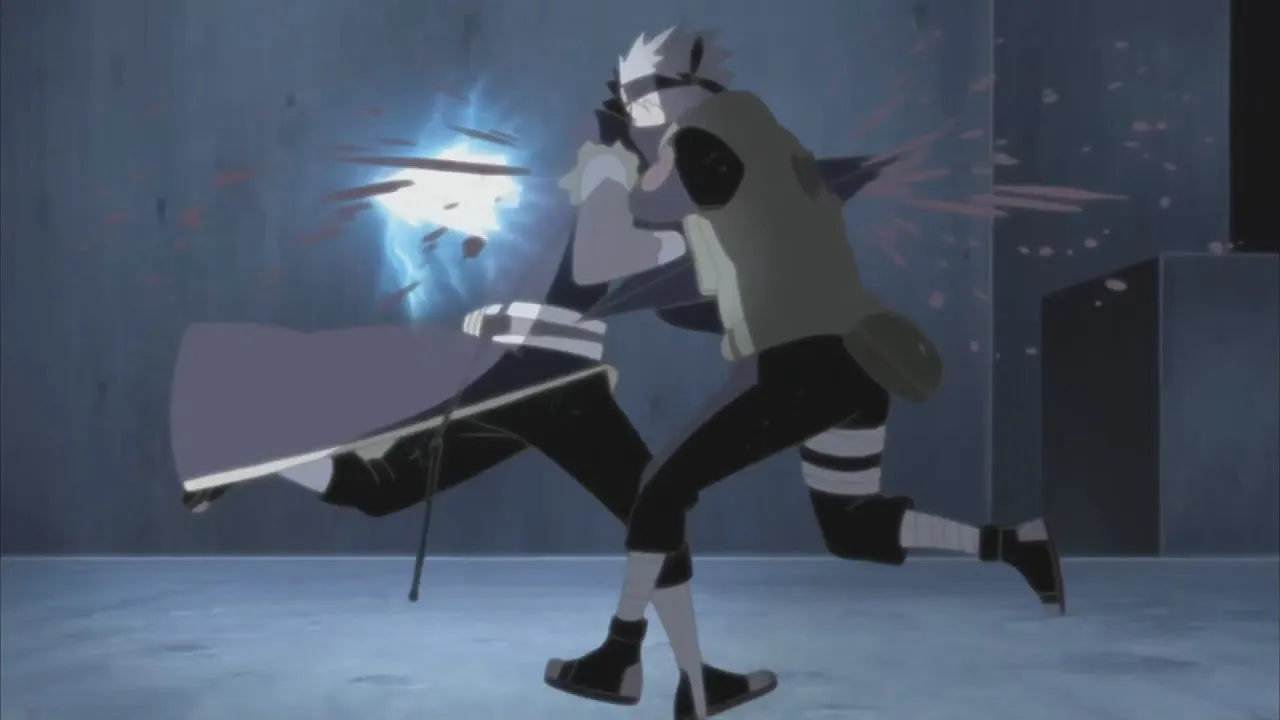
The Ultimate Tactical Leveler: The Kamui Dimension
The brilliance of this fight begins with its location. By dragging Kakashi into the Kamui dimension, Obito inadvertently stripped away his own greatest defense. In the outside world, Obito was untouchable—literally. His ability to phase through objects made him a ghost on the battlefield.
However, inside the pocket dimension, the two were on equal footing. There were no distractions, no reinforcements, and no phasing. It was a pure, raw environment where the only things that mattered were reflexes, muscle memory, and the will to kill—or save—the person standing across from you.
Choreography as Storytelling
What makes this sequence arguably the best hand-to-hand combat in anime history is the seamless flashback integration. The animators at Studio Pierrot performed a miracle by intercutting the life-or-death struggle of the present with the playful, competitive sparring of their childhood.
As the adult Kakashi throws a punch, the frame transitions to a young Kakashi performing the same move. When Obito blocks, we see his younger self doing the same. This "shadow-boxing with the past" highlights a heartbreaking reality: despite decades of war, trauma, and differing ideologies, their movements are still perfectly in sync. They are two halves of a whole, performing a dance they learned as boys, now being used to tear each other apart.
 Also ReadNaruto vs Pain: Full Episode Breakdown & Attacks
The Return to Shinobi Roots
In an era of the show dominated by "Kyuubi Bombs" and "Perfect Susano'o," this fight brought back the beauty of Taijutsu. We see:
- Kunai CQC (Close Quarters Combat): The metallic clang of blades replaces the roar of energy.
- Hand-Sign Manipulation: In one of the most famous moments in anime, Obito uses Kakashi’s hand to help weave his own Fire Style signs—a move that is both tactically brilliant and deeply intimate.
- The Lightning Signal: The use of the Raikiri/Chidori isn't just for damage; it represents the shared legacy of the Fourth Hokage’s students.
The Silent Discussion: A War of Ideals
There is almost no dialogue during the heat of the battle, and there doesn’t need to be. The "silent discussion" is felt through every strike. Kakashi is fighting with a heavy heart, burdened by the guilt of "killing" Rin and failing to protect Obito. Obito, meanwhile, is fighting to prove that the world is a literal hell, attempting to sever his last remaining tie to his former self.
The climax—Kakashi impaling Obito with a lightning-infused kunai—is a hollow victory. We later learn that Obito orchestrated this lethal blow to destroy the Forbidden Individual Curse Tag placed on his heart by Madara. Even in defeat, Obito was a master manipulator, but the look in Kakashi’s eyes told a different story: he wasn't just stabbing an enemy; he was killing his best friend for the second time.
Why It Remains the GOAT
The Kakashi vs. Obito fight is a masterpiece because it respects the viewer’s emotional investment. It doesn't rely on flashy power-ups; it relies on the decades of history we watched these characters endure. It is the peak of Naruto's direction, music, and choreography—a reminder that the most powerful jutsu in the world is the one that pulls at the human heart.
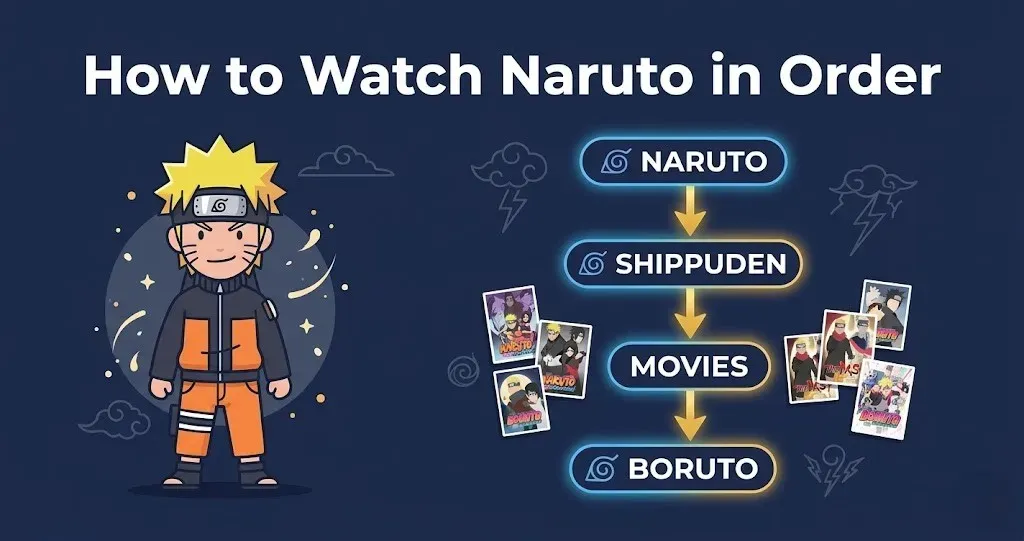
 Also ReadHow Many Seasons Does Naruto Have? Complete Season Breakdown






// Comments