

Introduction: The Return of Pure Evil
In the modern landscape of shonen anime, villains have become increasingly complex. We are used to antagonists like Pain (Naruto) or Stain (My Hero Academia)—characters with tragic backstories, justifiable grievances, or noble goals twisted by radical means. We are conditioned to look for the broken child inside the monster.
Ryomen Sukuna rejects this entirely.
The King of Curses is a breath of toxic fresh air because he is unburdened by ideology or tragedy. He is not a revolutionary, a victim, or a fallen hero. He is, by his own definition, a natural disaster. His success as a villain stems from his absolute, unapologetic hedonism and the terrifying simplicity of his existence: he lives only for his own pleasure, and everything else is merely scenery to be destroyed.
1. The Rejection of the "Sad Backstory"
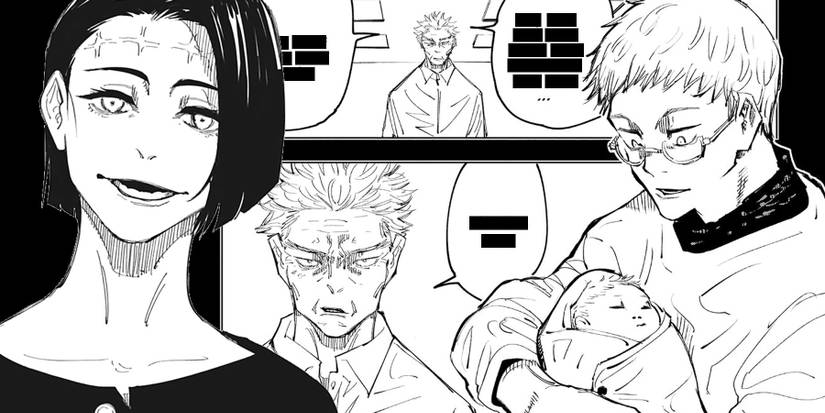
The most striking aspect of Sukuna’s writing is the absence of a "reason." In Jujutsu Kaisen, curses are born from negative human emotions, but Sukuna (originally a human sorcerer) transcends this. Author Gege Akutami provides no flashback to a traumatic childhood to justify his cruelty.
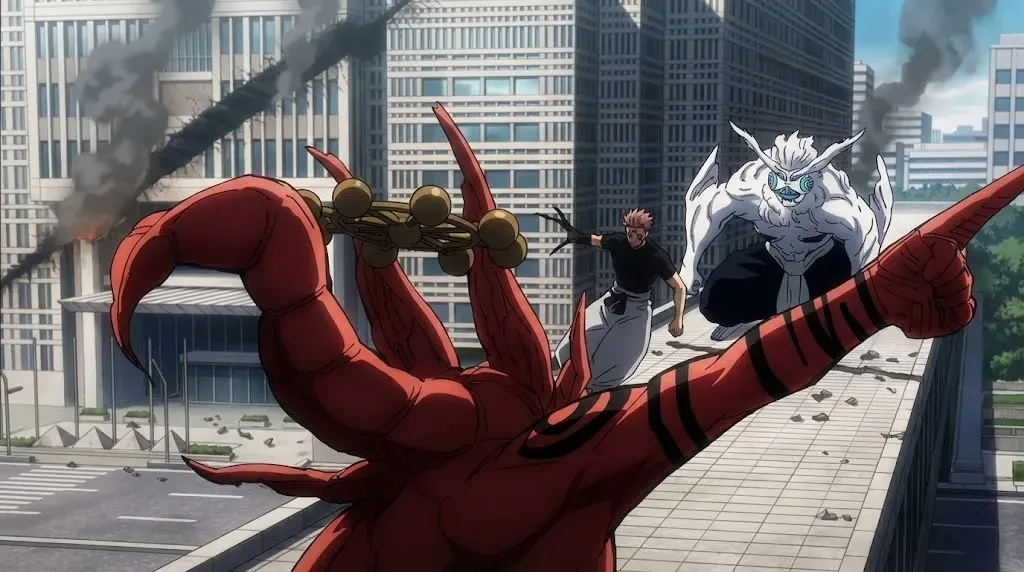 Also ReadSukuna's World-Cutting Slash Explained
This omission is deliberate. Giving Sukuna a tragic past would humanize him, and the point of Sukuna is that he has ascended beyond humanity. He is not "evil" because he was hurt; he is evil because he views himself as a higher being for whom moral constraints are as irrelevant as they are to a hurricane. He kills not out of vengeance, but out of boredom or mild annoyance. This lack of justification makes him unpredictable and infinitely more terrifying than a villain who follows a logical code.
2. The Philosophy of Absolute Hedonism
Sukuna operates on a philosophy of "Might Makes Right," but without the political ambition usually attached to it. He doesn't want to rule the world—governing is boring. He simply wants to eat when he is hungry, kill when he is annoyed, and play with "toys" (like Megumi Fushiguro) that spark his interest.
His mindset is best summarized in his battle against Jogo. Jogo fights for the "future of curses," a noble, racial goal. Sukuna mocks him for it. To Sukuna, attaching oneself to a cause is a weakness. True strength is solitary. He exists in a state of "天上天下唯我独尊" (Tenjo Tenge Yuiga Dokuson)—"Throughout Heaven and Earth, I alone am the honored one." This total self-centeredness makes him immune to "Talk no Jutsu." You cannot debate Sukuna, because he doesn't care about your point of view.
3. The Natural Disaster Metaphor
The comparison of Sukuna to a natural disaster is not just poetic; it is literal. This is best exemplified during the Shibuya Incident Arc.
 Also ReadThe Mahoraga Ritual Rules Explained
When Sukuna activates his Domain Expansion, Malevolent Shrine (Fukuma Mizushi), he doesn't target specific enemies. He paints a 200-meter radius of death. The technique, "Cleave" and "Dismantle," slashes everything—civilians, buildings, allies, enemies—into dust.
This scene captures the essence of the "disaster." An earthquake does not choose who dies; it just shakes. Sukuna does not choose his victims; they are simply in his way. The horror lies in the indiscriminate nature of his power. It forces the protagonists to realize that they aren't fighting a person; they are fighting an act of God.
4. The Perfect Foil to Yuji Itadori
Sukuna works perfectly because he is the antithesis of the protagonist, Yuji Itadori.
- Yuji is driven by the desire for a "proper death" and the value of every human life. He seeks connection and altruism.
- Sukuna mocks the value of life and seeks only his own survival and pleasure. He represents ultimate selfishness.
This dynamic creates a unique psychological horror. Yuji is a "cage" for the beast, but every time the beast gets out, he defiles Yuji’s body by using it to commit massacres. Unlike Naruto and Kurama, who eventually find common ground, Sukuna and Yuji share nothing but hatred. Sukuna doesn't want to be Yuji's friend; he breaks Yuji’s spirit at every opportunity (such as mocking him after Junpei’s death), proving that some evils cannot be reasoned with—they can only be exorcised.




















// Comments