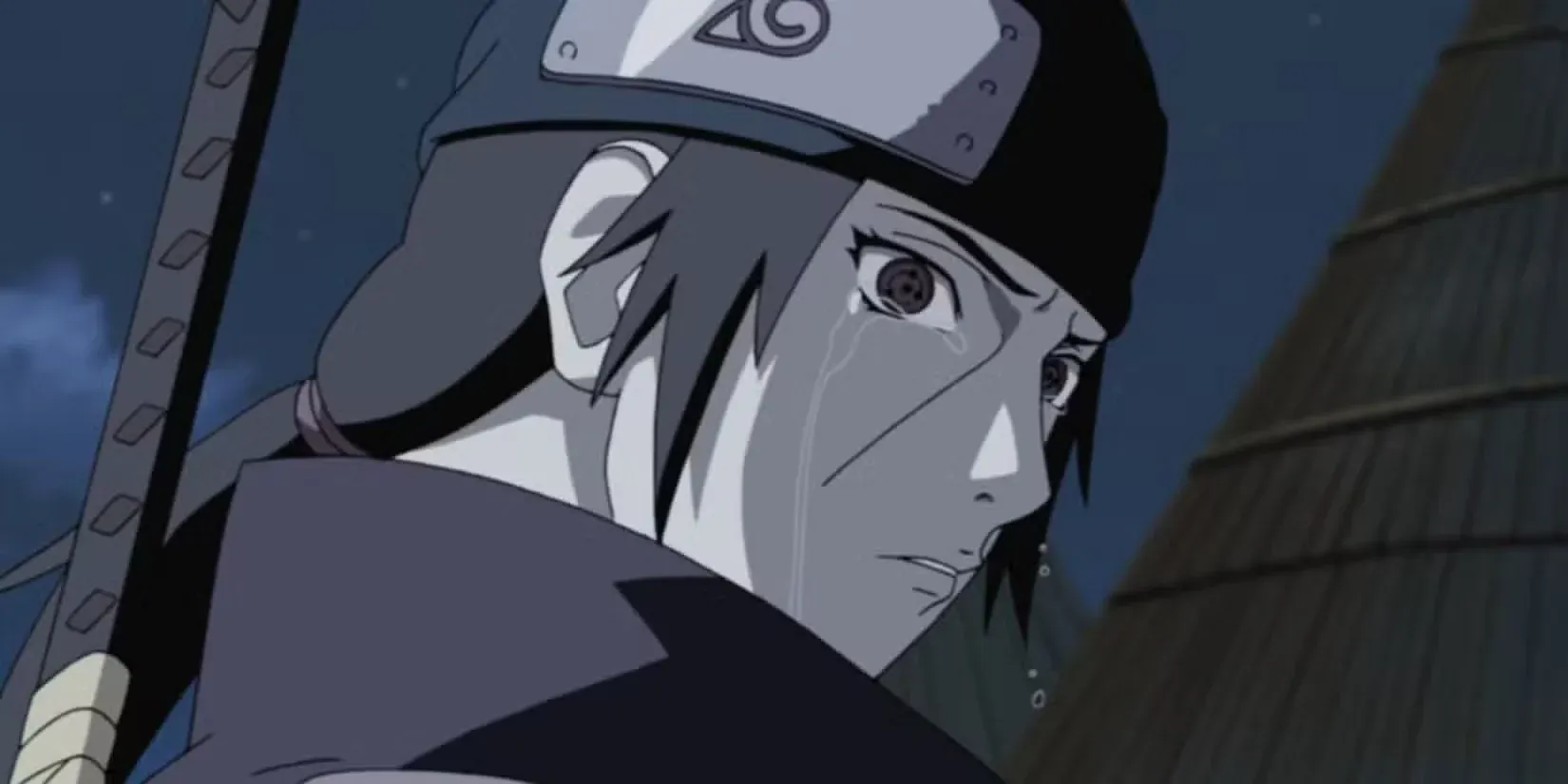
Introduction: The Villain Who Was a Savior
In the history of anime, few plot twists have redefined a character as completely as the truth behind Itachi Uchiha. Introduced as a cold-blooded kinslayer who murdered his entire family on a whim to "test his abilities," Itachi was the ultimate object of hatred for his brother, Sasuke, and the audience.
However, the revelation of his true motives transforms him from a generic villain into a tragic, Shakespearean figure. Itachi did not act out of malice; he acted out of an impossible necessity. His life serves as a brutal examination of the "needs of the many" versus the "bonds of blood."
1. The Impossible Choice: Civil War vs. Genocide
To understand Itachi's sacrifice, one must understand the political climate of Konoha. The Uchiha clan, marginalized and distrusted by the village leadership (specifically Danzo Shimura), was planning a violent coup d'état.
Itachi, a pacifist who had witnessed the horrors of war as a child, was placed in a deadlock:
 Also ReadNaruto vs Pain: Full Episode Breakdown & Attacks
- Scenario A: Side with his family. The coup would trigger a civil war, leaving the Hidden Leaf Village vulnerable to invasion by other nations, potentially sparking a Fourth Great Ninja War. Countless lives, including the Uchiha, would be lost.
- Scenario B: Side with the village. Eliminate the threat (his own clan) before the coup begins. The Uchiha name would be tarnished, but the village's peace would remain intact, and one person—Sasuke—could be spared.
Itachi chose the path of the "greater good," becoming a monster in history books to be a savior in the shadows.
2. The Psychology of the Double Agent
Itachi lived a life of profound isolation. By age 13, he was an Anbu Captain acting as a double agent—spying on the Uchiha for the village, and on the village for the Uchiha.
This duality fractured his existence. He had to suppress his emotions completely, wearing a mask of indifference while internally agonizing over the inevitable slaughter. His ability to compartmentalize his love for his family while plotting their demise speaks to a terrifying level of mental discipline and self-sacrifice.
3. The "Lie" as a Tool of Love
The most tragic aspect of Itachi’s sacrifice was not the killing itself, but the aftermath. He didn't just kill his parents; he forced his beloved younger brother, Sasuke, to watch it.
 Also ReadHow Many Seasons Does Naruto Have? Complete Season Breakdown
He deliberately traumatized Sasuke, encouraging him to "hate me, detest me, and run away in shame." Why?
- To Motivate Sasuke: He wanted Sasuke to become strong enough to eventually kill him.
- To Protect the Uchiha Honor: By taking all the blame, Itachi ensured the Uchiha were remembered as victims of a "madman," rather than traitors planning a coup.
- To Punish Himself: Itachi believed he deserved to die by an Uchiha's hand (Sasuke’s) as atonement for his sins.
4. The Akatsuki Years: Protecting from the Shadows
Even after fleeing the village as a rogue ninja, Itachi’s sacrifice continued. He joined the criminal organization Akatsuki not to help them, but to keep them in check.
His presence in the Akatsuki served as a deterrent. As long as Itachi was alive, he ensured that "Madara" (Obito) and the organization did not attack the Hidden Leaf. He spent his final years dying of a painful, terminal illness, sustaining himself on sheer willpower and medication just long enough to die at Sasuke's feet.
Conclusion: The True Hokage
Itachi Uchiha embodies the darkest interpretation of the "Will of Fire." He did not seek glory, recognition, or love. He accepted hatred and disgrace to protect the peace. As the First Hokage Hashirama later noted, Itachi was a "better shinobi" than any of them—a man who endured the darkness so that others could live in the light.
















// Comments