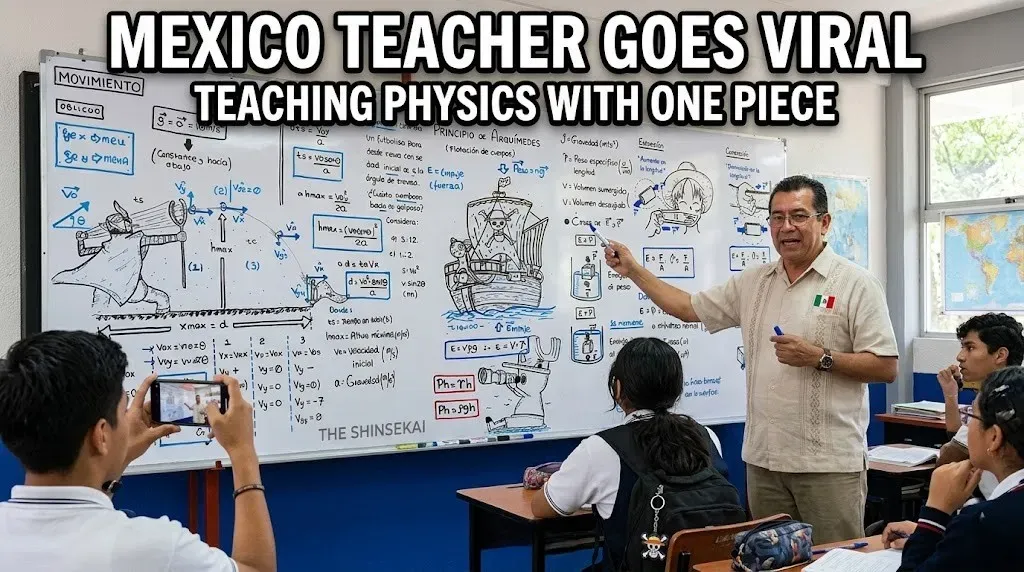

Mexico Teacher Goes Viral Teaching Physics With One Piece
What happens when a physics teacher decides to ditch the textbook and fire up an anime clip instead? You get a classroom full of wide-eyed students — and a video that breaks the internet.
A teacher from Mexico recently went viral after using One Piece, the beloved anime series, to explain complex one piece physics class concepts to his students. The clip spread like wildfire across social media, sparking a global conversation about how anime in education might just be the future of learning.
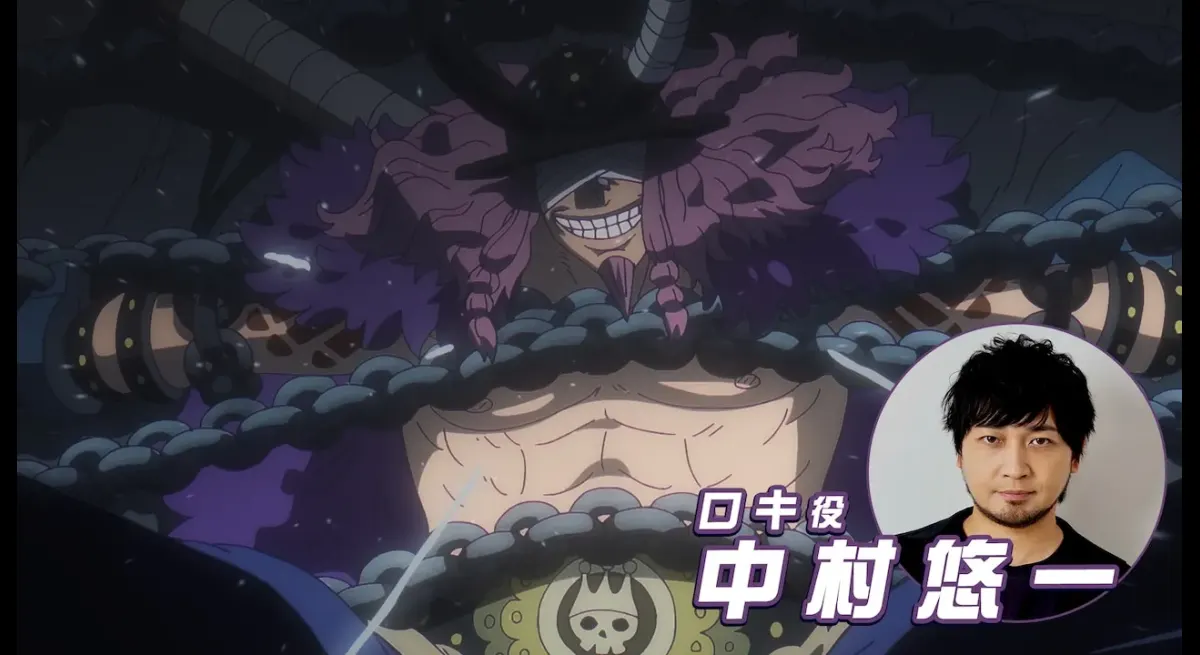 Also ReadYuichi Nakamura as Loki in "ONE PIECE": Elbaf Edition OP by Aina The End
The Viral Moment That Captured the World
The video, which surfaced as one of 2025's most-shared education shorts, shows a Mexican physics teacher projecting scenes from One Piece onto the classroom screen. Rather than lecturing from notes, he pauses the anime at key moments and breaks down the real-world science behind the action.
Students who looked like they'd rather be anywhere else suddenly sat up straight.
The clip racked up millions of views almost overnight, turning this viral teacher Mexico story into a full-blown international conversation about creative teaching methods.
Why One Piece? The Science Is Actually There
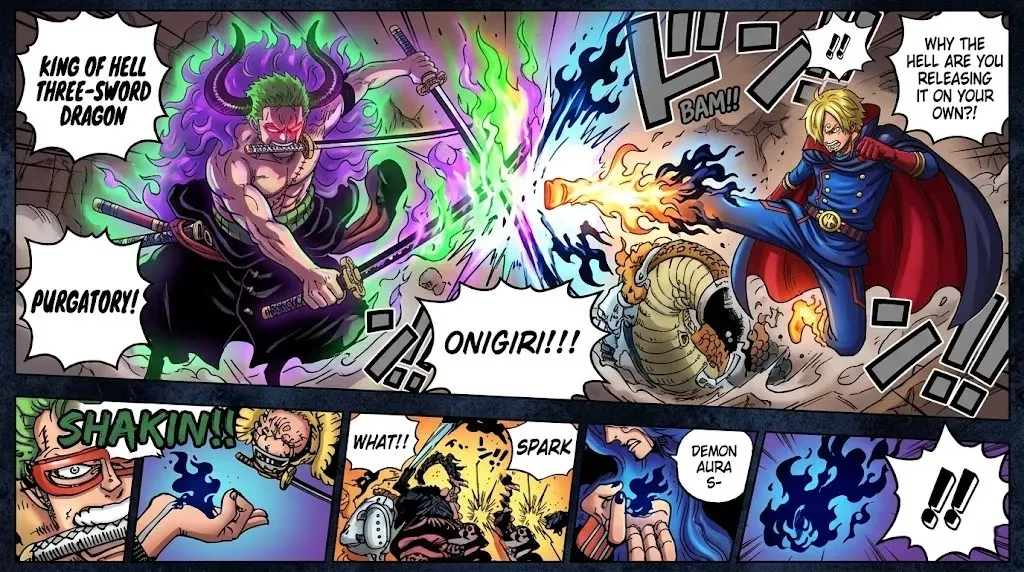
 Also ReadOne Piece Chapter 1180 "Omen" Spoilers: Imu's God-Like Power Destroys Zoro & Sanji
One Piece isn't just flashy animation and emotional arcs — it's quietly packed with one piece facts that align surprisingly well with physics principles.
Here's where the science shows up in the show:
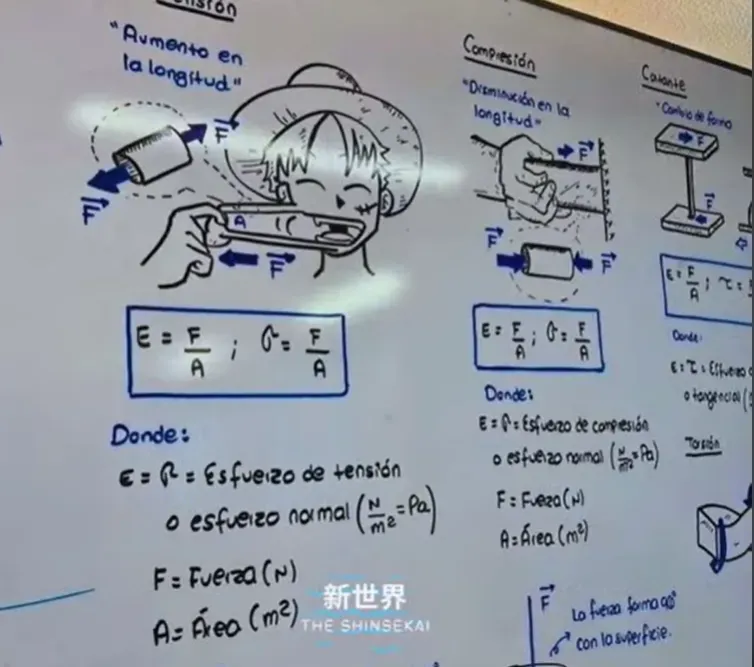
Momentum and impact — Luffy's "Gear" techniques involve massive acceleration and force. The teacher broke down Newton's Second Law (F = ma) using Luffy's punches as real-world examples.
Fluid dynamics — Water-based attacks from characters like Jinbe offered a natural entry point into fluid pressure and wave mechanics.
Luffy physics concepts, it turns out, aren't as fictional as they seem.
The Anime Teaching Method: Why It Works
This isn't just a novelty. There's solid cognitive science behind why the anime teaching method connects with students in ways traditional lectures sometimes don't.
1. Emotional Engagement Boosts Retention
When students are emotionally invested in characters, their brains are more alert. According to research on emotionally engaged learning, students retain information significantly better when content is tied to something they care about.
One Piece fans already love these characters. When their teacher uses Luffy to explain inertia, the concept suddenly has a face — and that face means something.
2. Visual Learning Accelerates Understanding
Physics is abstract. Forces, vectors, and energy are invisible. Animation makes them visible, which is a game-changer for visual learners.
The physics explained with anime approach essentially turns abstract equations into moving pictures. Students see the arc of a projectile, the tension in a rope, the blast radius of an explosion — all in high-definition animation that no whiteboard can replicate.
3. It Breaks the Monotony
Classrooms can feel repetitive. The same desk, the same voice, the same format — day after day. Introducing anime flips the script entirely.
When learning feels like watching your favourite show, resistance drops. And when resistance drops, curiosity takes over.
The Mexico Teacher Who Made It Happen
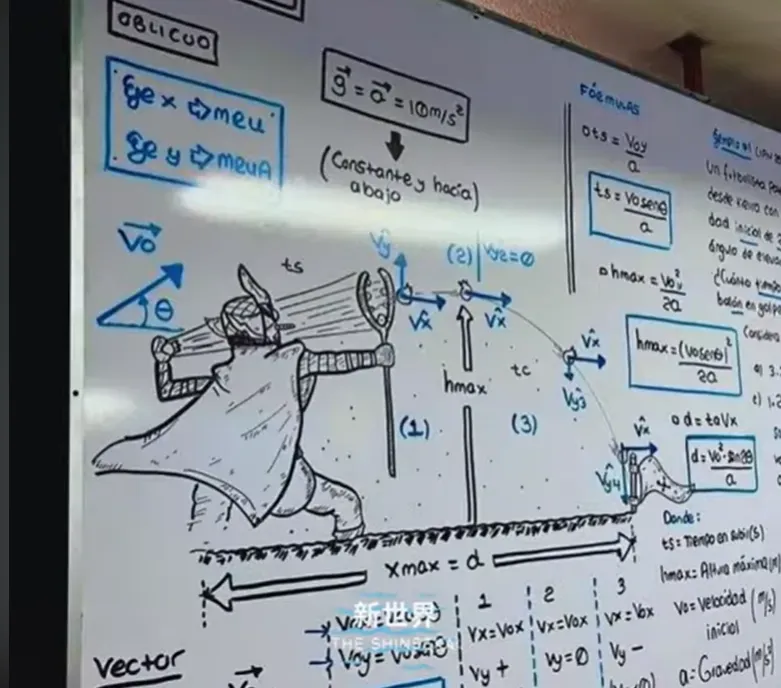
Oblique Projectile Motion: A Mexican teacher illustrated oblique projectile motion using a hand-drawn anime character, mapping velocity components, maximum height, and range formulas visually on the whiteboard.
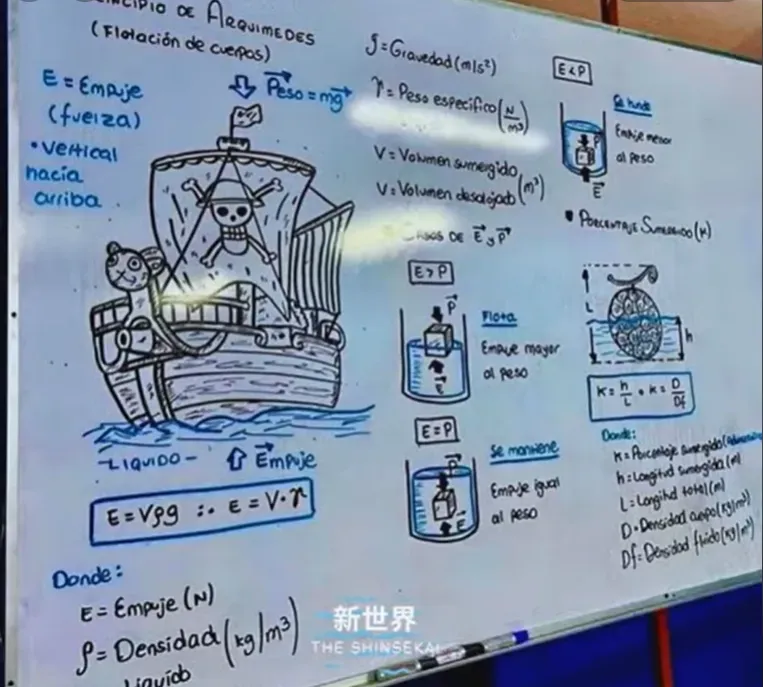
Archimedes' Principle: The teacher drew One Piece's iconic Going Merry ship to explain Archimedes' Principle, buoyancy force, submerged volume, and fluid density in a creative, student-friendly way.
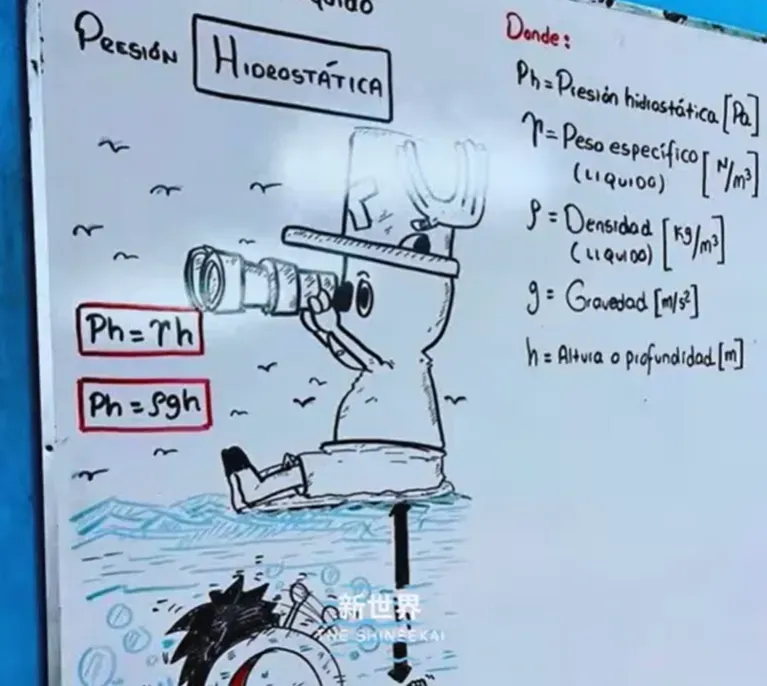
Hydrostatic Pressure: Using a One Piece character peering through binoculars underwater, the teacher brilliantly explained hydrostatic pressure formulas, including specific weight, fluid density, gravity, and depth variables.
Details about the viral teacher Mexico phenomenon reveal a passionate educator who had been integrating pop culture into lessons for years before anyone filmed him.
By all accounts, he didn't set out to go viral. He just wanted his students to understand momentum.
What he accidentally proved was something educators have been arguing for decades: context matters more than content delivery. If students can't see why a concept is relevant, they'll tune out. Show them Luffy getting launched across the ocean, and suddenly Newton's Third Law makes perfect sense.
Is Anime in Education a Legitimate Strategy?
Short answer: yes — with intention.
Anime in education works best when it's purposeful, not just entertaining. The Mexico teacher succeeded because he didn't just play a clip and walk away. He paused, questioned, and connected the animation to the actual curriculum.
Here are a few principles that make this approach effective:
- Alignment with learning objectives — The anime moment must directly connect to a concept being taught.
- Active discussion — Students should be asked to identify the physics (or chemistry, or history) themselves.
- Brief and focused — A 3-minute clip used well beats a 30-minute episode played passively.
- Supplementary, not primary — Anime should enhance the lesson, not replace structured learning.
The American Psychological Association supports contextual, interest-driven teaching as a proven way to boost motivation in STEM subjects.
Fun Learning Ideas Inspired by This Trend
The viral moment has inspired teachers worldwide to rethink their own classrooms. Here are some fun learning ideas drawn from the anime-in-education movement:
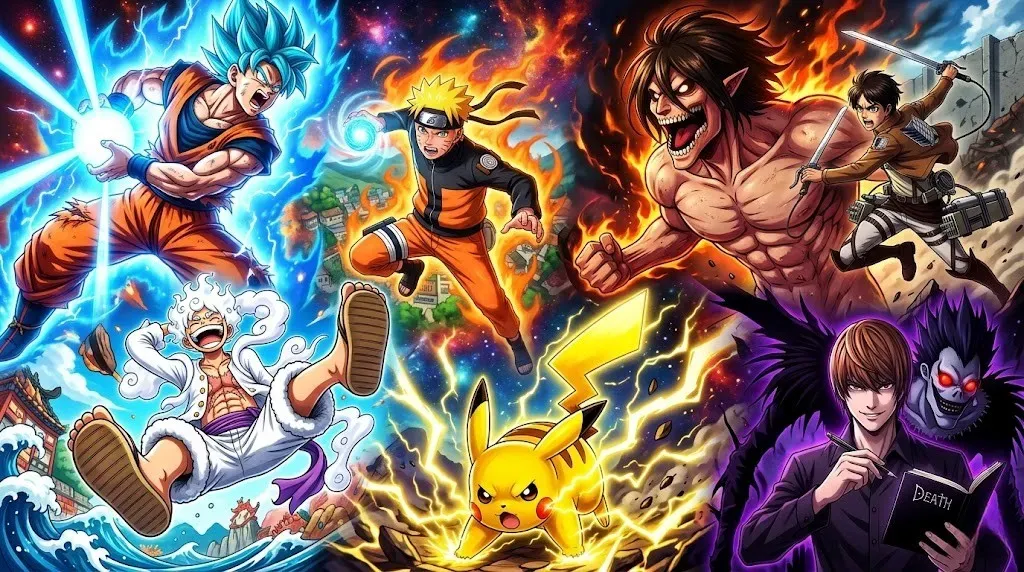
- Biology + Attack on Titan — Use Titan anatomy to discuss human muscular and skeletal systems.
- Chemistry + Fullmetal Alchemist — Alchemy's "law of equivalent exchange" maps surprisingly well onto conservation of mass.
- History + Vinland Saga — Explore Viking-era Scandinavia through one of anime's most historically grounded series.
- Math + Dr. Stone — Senku's calculations offer real math problems hidden inside an exciting survival story.
The pattern is clear: when educators meet students where their interests live, magic happens.
What This Means for the Future of Education
The Mexico teacher's viral moment is more than a feel-good story. It's a signal.
Gen Z and Gen Alpha students have grown up surrounded by streaming, gaming, and global fandoms. Their brains process information differently — faster, more visually, and with a strong preference for narrative over abstraction.
Educators who adapt to this aren't dumbing down the curriculum. They're translating it into a language their students already speak fluently.
Education shorts featuring teachers like this are reshaping how the world thinks about what a classroom can look like. And if a single anime clip can make a student finally understand the law of conservation of momentum — that's not entertainment. That's teaching at its finest.
Conclusion
A teacher in Mexico picked up his remote, pressed play on One Piece, and accidentally reminded the world what great teaching looks like.
By using one piece physics class moments to bring luffy physics concepts to life, he showed that the best lessons don't always come from textbooks. Sometimes they come from a rubber-limbed pirate launching himself at the speed of sound.
Whether you're an educator looking for fun learning ideas or a student who learns better through stories, this viral moment is proof: the future of education is creative, connected, and maybe just a little bit animated.













// Comments