
The Elbaf Arc has done something very few arcs in the history of One Piece have managed: it has simultaneously rewritten the past and raised the stakes of the present in the span of a handful of chapters. What began as an exploration of the legendary Giant kingdom — a location teased since the Drum Island arc — has exploded into one of the most lore-dense sequences Eiichiro Oda has ever put to paper.
Through Prince Loki's first-hand narration of the God Valley Incident and the cataclysmic Chapter 1174 confrontation, the series has delivered answers to questions fans have carried for decades, while simultaneously introducing new ones. This article breaks down everything.
The God Valley Incident: What the World Government Buried
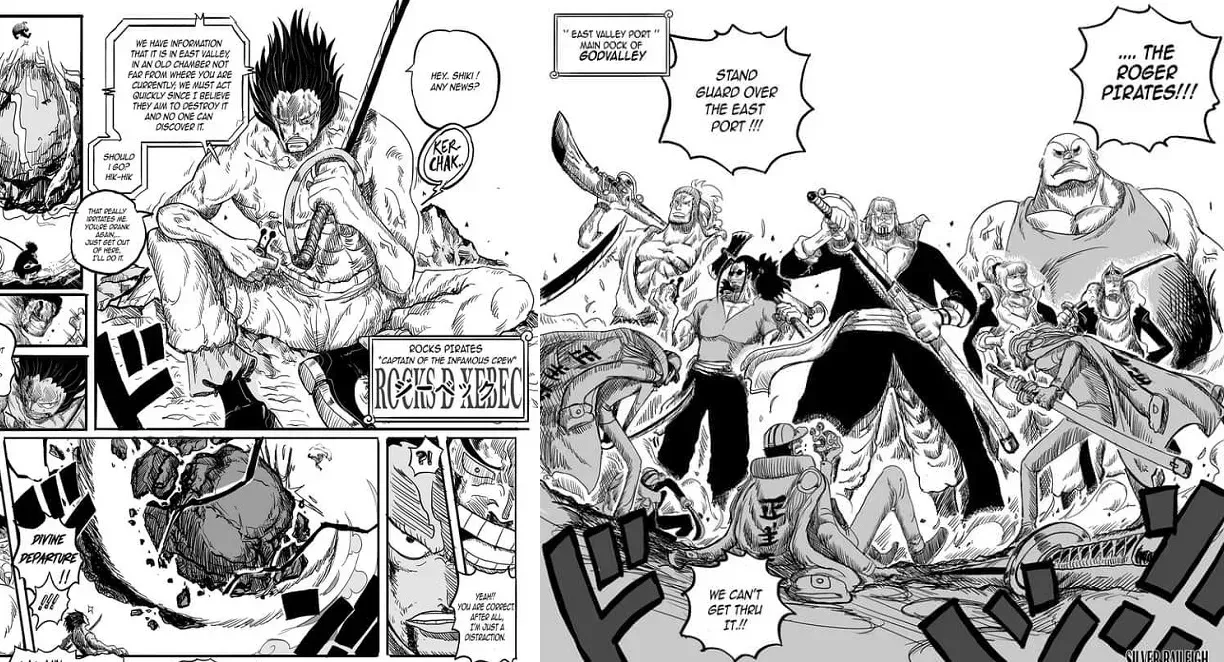
For years, the God Valley Incident existed as one of One Piece's most tantalizing mysteries — a single sentence in the Marine record books describing the death of the legendary Rocks Pirates, and the birth of the Roger-Garp alliance. What the World Government's history deliberately omitted was far more damning than anything it preserved.
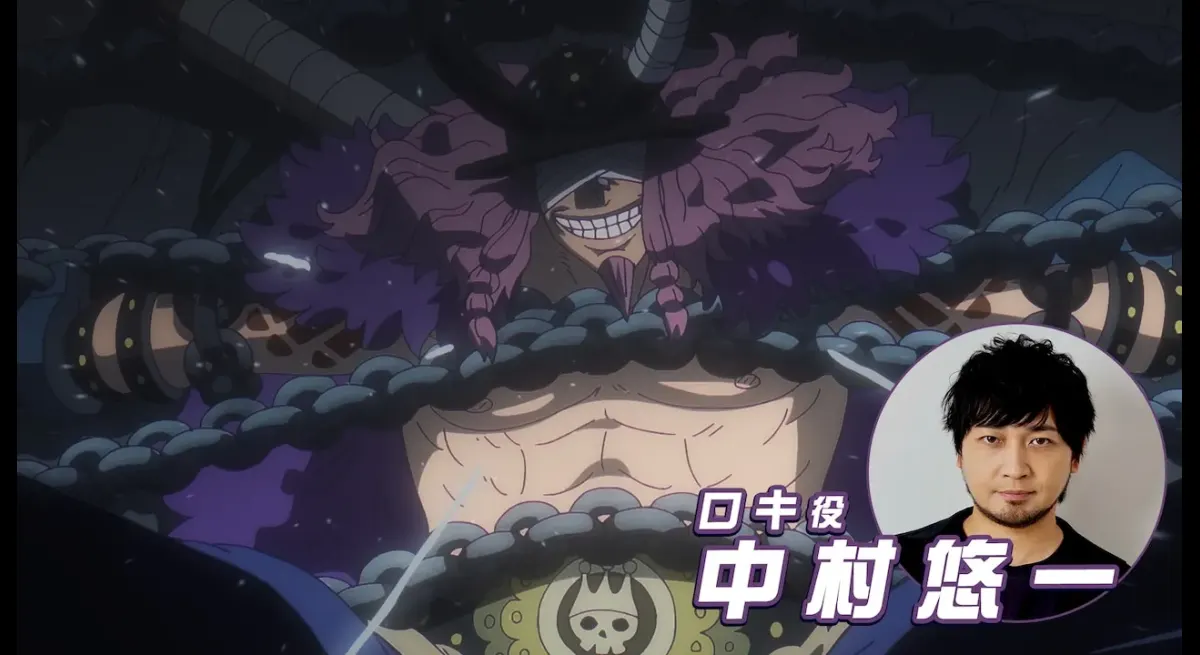 Also ReadYuichi Nakamura as Loki in "ONE PIECE": Elbaf Edition OP by Aina The End
Prince Loki's flashback, delivered from the perspective of someone who was there, reveals the incident for what it truly was: a Celestial Dragon-organized "Native Hunting Competition." Wealthy nobles descended on God Valley not for battle or conquest in any traditional sense, but for sport — treating the island's inhabitants and the ancient Davy Family as prey in a curated genocide. God Valley was chosen specifically for its enormous wealth and the presence of the Davy bloodline, the family whose legacy is now tied to the most consequential bloodlines in the series.
Rocks D. Xebec: Villain or Victim?
The flashback's most shattering moment is the reframing of Rocks himself. The man history remembers as the most dangerous pirate who ever lived — more feared than Roger — did not arrive at God Valley to seize some mythical weapon or challenge the world. He came to rescue his wife and infant child from the Celestial Dragon's killing grounds. That child was Marshall D. Teach. Blackbeard is the son of Rocks D. Xebec.
The implications are enormous. The 'D.' in Blackbeard's name is not coincidence or adoption — it is direct lineage from the man Garp and Roger had to team up to stop. Every atrocity Blackbeard commits, every power he accumulates, every throne he reaches for, now carries the shadow of a father whose final conscious act was not war — it was love for his family.
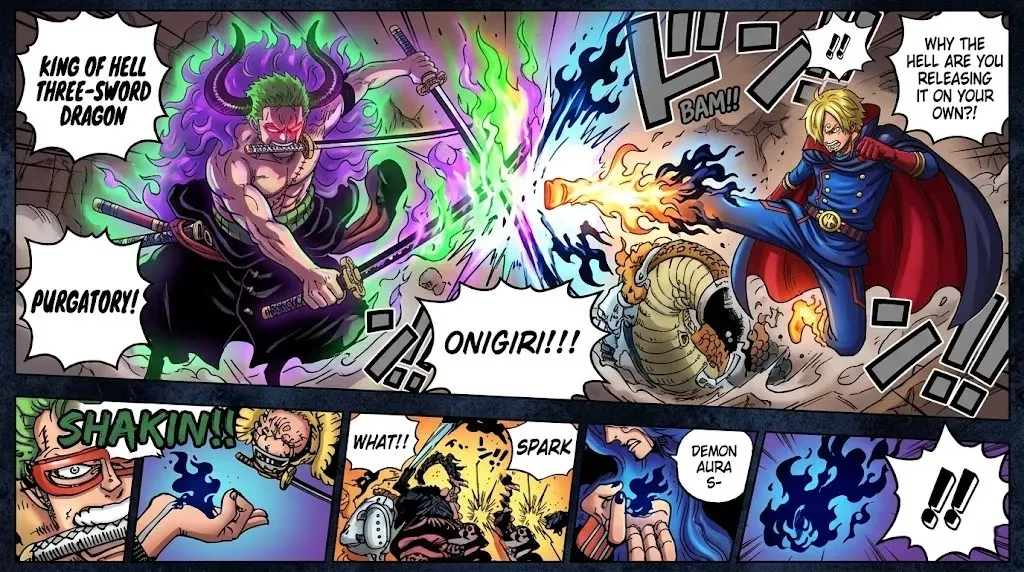
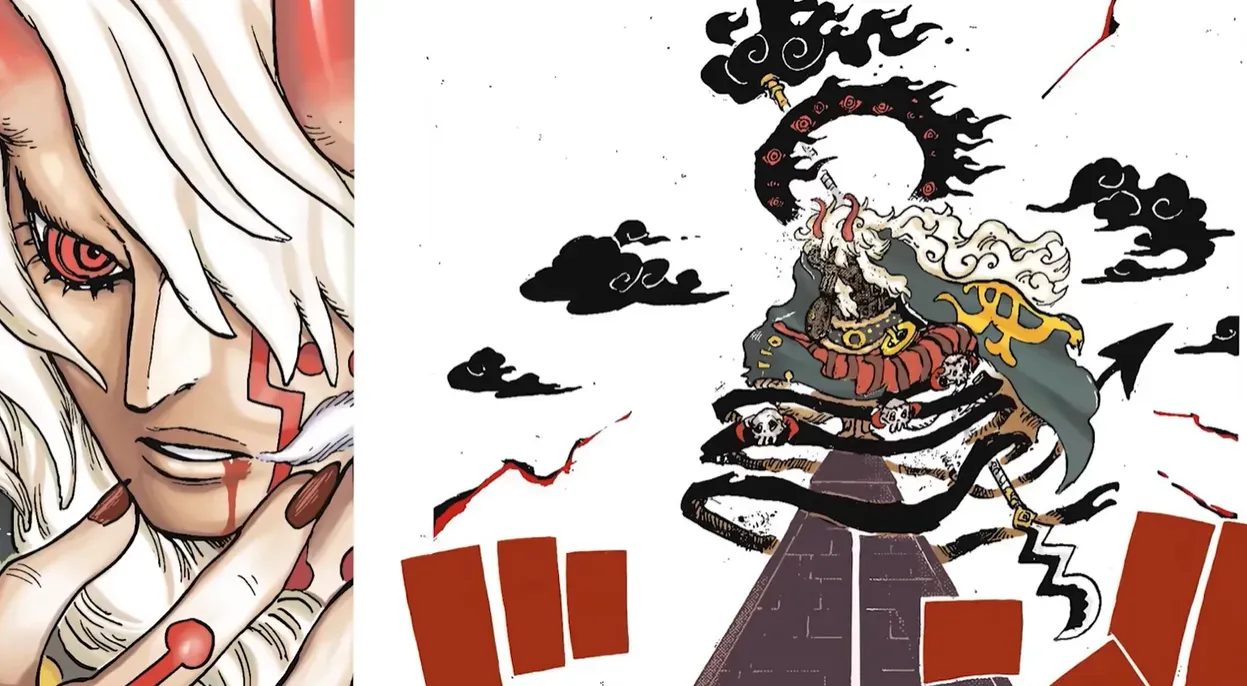 Also ReadOne Piece Chapter 1180 "Omen" Spoilers: Imu's God-Like Power Destroys Zoro & Sanji
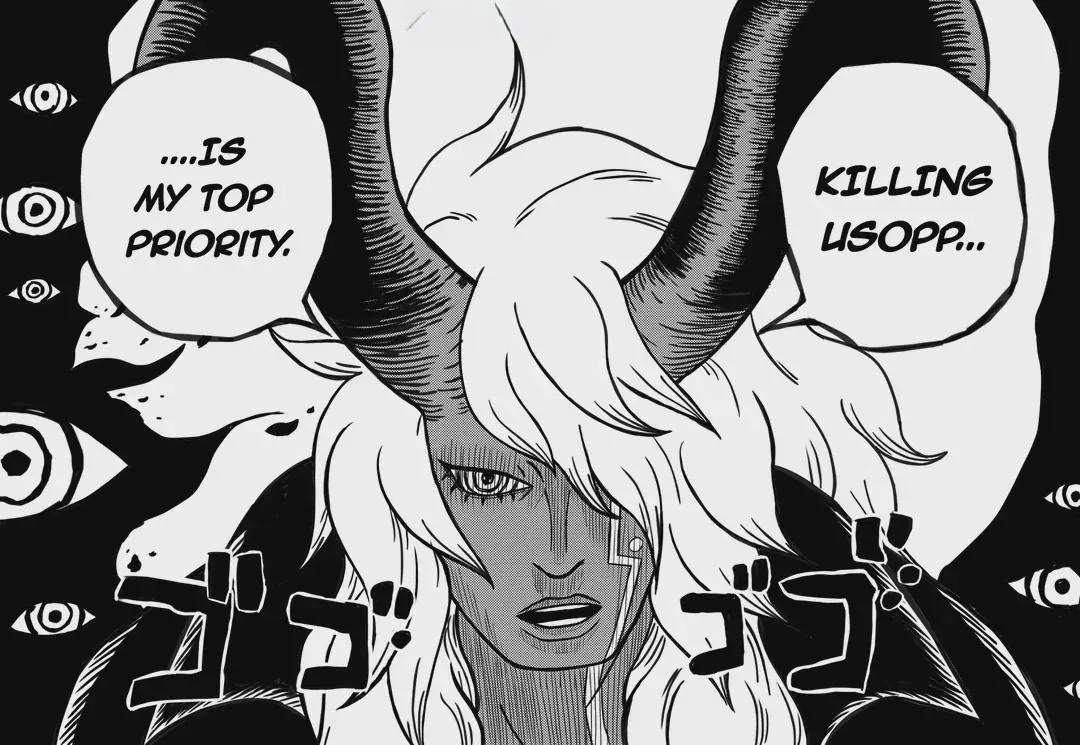
Imu's direct involvement is the other devastating piece. The entity at the top of the World Government deployed a power called Domi Reversi directly on Xebec — stripping away his mind and transforming him into a mindless demon. This wasn't a battle Garp and Roger won through superior strength. It was a mercy killing, guided by Xebec's own will communicated through Roger's Voice of All Things ability. The most powerful pirate in history died asking to be freed. And the World Government erased every trace of the circumstances that led to that death.
Dragon, Shanks & Shamrock: Origins Rewritten
Monkey D. Dragon's revolutionary conviction has always begged a question: what happened to turn a Marine into the world's most wanted man? The Elbaf flashback doesn't answer that completely, but it provides a crucial piece. Dragon was present at God Valley not as an insurgent but as a loyal Marine cadet, assigned to the chaos of an incident the World Government itself had orchestrated.
What he witnessed — Celestial Dragons treating human lives as sporting entertainment, Imu transforming a man into a monster, the institutional machinery working to cover all of it up afterward — would radicalize anyone. Dragon did not stand idle. He evacuated civilians from the killing field, and among those he reportedly helped to safety were a young Shanks and his brother, Shamrock.
Shamrock's existence is itself a revelation. Shanks' past has been a deliberate enigma since his introduction, his origins hinted at only vaguely as a child found in a chest by Roger's crew. The Elbaf arc now establishes that he had a brother, that both were on God Valley, and that they survived because of Dragon. The web of connection between the series' most powerful figures runs deeper than even the most dedicated theorists had mapped.
Prince Loki Unleashed: The Black Dragon of Elbaf
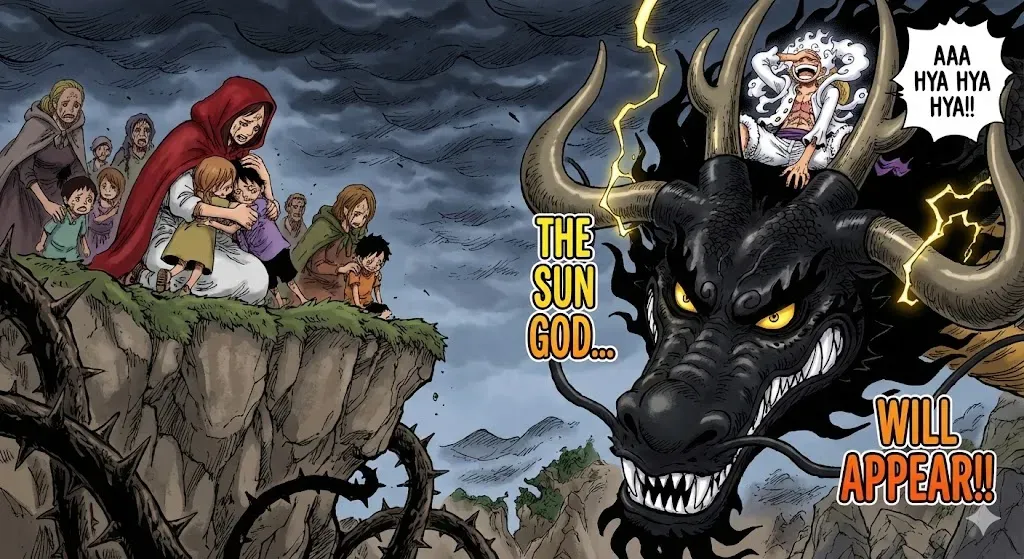
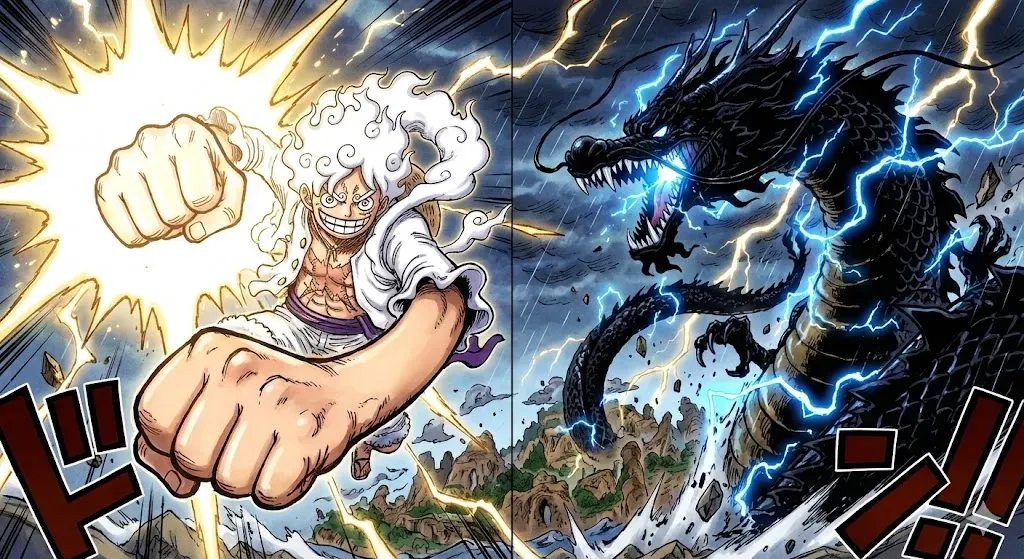
Chapter 1174 delivers the full reveal of Prince Loki's power, and it is one of the most striking visual and narrative moments the Elbaf arc has produced. The blindfolded giant prince — whose eccentricities, squirrel form, and sheer personal charisma had already made him one of the arc's standout characters — transforms into something that resets the series' understanding of scale.
Loki's Devil Fruit, while still unnamed in the text, enables a Mythical Zoan transformation into an enormous black dragon. The fruit is widely theorized to be the Model: Nidhogg, named for the primordial serpent-dragon of Norse mythology said to gnaw at the roots of the World Tree. It's a fitting parallel: Loki, the trickster god of Norse legend, wielding the power of Nidhogg against the forces of a corrupt divine order.
Kaido's Shadow, Dwarfed
When Kaido transformed into his full azure dragon form over Onigashima, the sheer visual scale of it sent ripples through the fandom. Loki's dragon form reportedly makes Kaido look small. This isn't hyperbole from reviewers — the comparative sizing in Chapter 1174's panels places Loki's transformation in a category that the series has not depicted before.
Beyond scale, Loki demonstrates dual elemental mastery — both lightning and ice — capable of shaking the entire island of Elbaf with his movements. He also wields Ragnir, a legendary hammer, which he employs even in his smaller squirrel form, suggesting his physical power is extreme across transformations. His confirmed abilities include top-tier Observation Haki — he "sees" perfectly despite being blindfolded — and Conqueror's Haki, cementing him among the highest-tier characters in the current story.
The most significant combat feat in his record is the permanent erasure of his own father, King Harald — an immortal ancient giant. The word "immortal" is doing heavy lifting in One Piece right now, given that the Gorosei have proved functionally unkillable by Gear 5 Luffy's assaults. That Loki achieved permanent destruction against a similarly immortal being raises his threat assessment considerably.
Power Scaling: Where Loki Sits Among the Giants
|
Category |
Prince Loki |
Gear 5 Luffy (Current) |
|
Devil Fruit |
Mythical Zoan (speculated: Nidhogg) Legendary |
Mythical Zoan: Nika — Hito Hito no Mi Legendary |
|
Scale |
Colossal black dragon — dwarfs Kaido |
Giant-mode Gear 5 — dwarfed by Loki |
|
Observation Haki |
Top-tier — functions fully blindfolded Elite |
Advanced — future sight confirmed |
|
Conqueror's Haki |
Confirmed Yes |
Confirmed Yes |
|
Elemental Control |
Lightning + Ice |
Rubber / Freedom-based reality warping |
|
Immortal Destruction |
Permanently erased immortal giant Confirmed |
Has not yet achieved permanent kill vs. Gorosei |
|
Current Standing |
Slightly above Luffy in raw output |
Holds "most ridiculous power" — projected to surpass |
The current consensus among the analyst community places Loki marginally above Luffy in raw destructive output and Haki application — but this reading comes with a crucial asterisk. Luffy's Gear 5 is explicitly described within the narrative as the "most ridiculous power" in existence, a power whose ceiling scales with Luffy's own imagination and fighting spirit. The Elbaf arc, narratively speaking, is setting up a situation where Luffy will be pushed beyond his current limits, as every arc before it has done. Loki is not the final antagonist — he is the benchmark that forces Luffy upward.
Why the Elbaf Arc May Be One Piece's Finest
Great arcs in One Piece accomplish two things simultaneously: they deliver the present-tense action that drives the plot, and they retroactively enrich everything that came before. Enies Lobby redefined Robin. Marineford recontextualized Garp. Wano reframed Kaido and Oden.
Elbaf is doing something even more ambitious — it is pulling back the curtain on the generation that preceded the current cast. The Roger Pirates, the Rocks Pirates, the founding structure of the World Government's true power. By placing Dragon, a young Shanks, Garp, Roger, and Xebec in the same location at the same pivotal moment, Oda has drawn a direct generational line from the age of legends to the age of Luffy. The new generation doesn't just inherit the world — they inherit its wounds.
The revelation that Blackbeard is Xebec's son transforms the series' ultimate endgame. Whatever confrontation awaits between Luffy and Blackbeard at the story's conclusion is no longer simply a clash between rivals. It is the convergence of two bloodlines shaped by the same catastrophic event — one seeking to free the world, and one whose very existence was born from the moment the world showed what it was willing to destroy to protect its order.
Elbaf is not just a saga stop. It is the chapter where One Piece finally shows us the whole board.




// Comments