Introduction
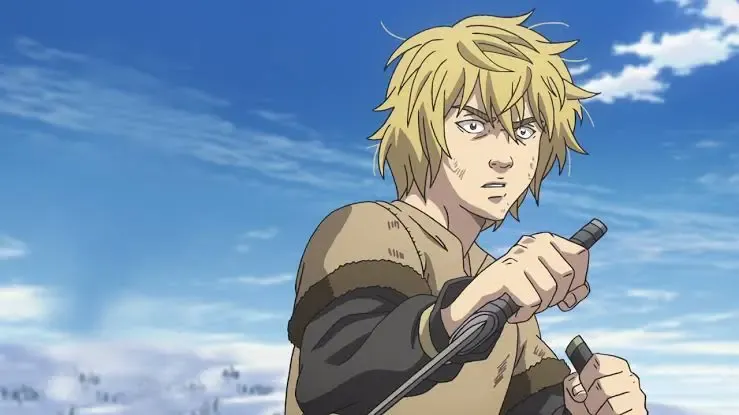
In a medium dominated by protagonists who grow stronger by defeating increasingly powerful foes, Thorfinn Karlsefni stands alone. His journey in Vinland Saga is not an ascent to power, but a descent into humility.
Widely regarded as one of the best-written protagonists of the last decade, Thorfinn’s arc fundamentally deconstructs the "hero's journey." He evolves from a bloodthirsty child soldier into a devoted pacifist, offering a profound meditation on guilt, trauma, and the true definition of strength.
1. The Deconstruction of the "Revenge" Trope
The brilliance of Thorfinn’s early characterization lies in how the author, Makoto Yukimura, baits the audience with a standard revenge plot only to reveal its inherent emptiness.
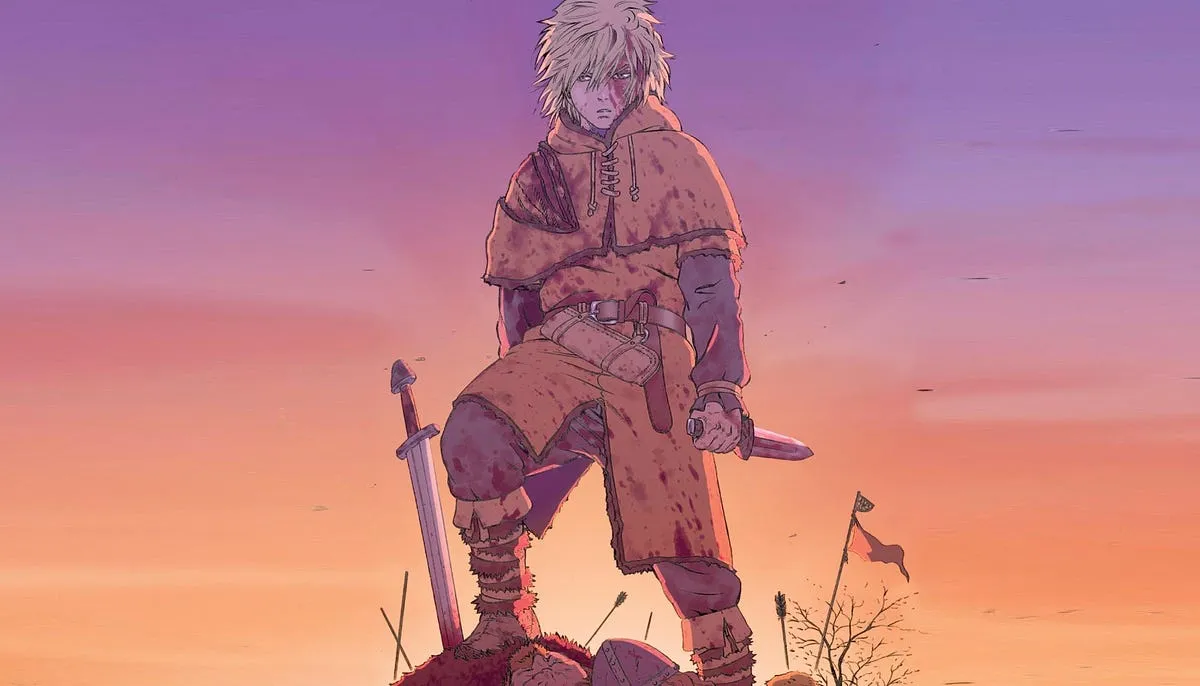
- The Hollow Shell: For the first prologue of the series, Thorfinn is fueled entirely by rage. He is a tool used by Askeladd, the very man he swore to kill. He represents the "glory" of Viking culture: ruthless, skilled, and violent.
- The "All for Nothing" Moment: The turning point occurs not when Thorfinn succeeds, but when he fails. When Askeladd is killed by Prince Canute rather than Thorfinn, Thorfinn’s entire reason for existing evaporates.
- Psychological Realism: This leaves him hollow. Unlike typical shonen heroes who find a new enemy immediately, Thorfinn enters a catatonic state of depression. The narrative forces us to confront the reality that a life built solely on destruction leaves nothing behind when the fighting stops.
2. The Crucible of Slavery: Learning the Value of Life
The "Farmland Arc" (Season 2) is where Thorfinn transforms from a caricature of violence into a human being.
 Also Read10 Best Anime With No Fanservice, Ranked
- Confronting the Ghosts: Stripped of his weapons and enslaved on Ketil’s farm, Thorfinn cannot use violence to solve his problems. He is forced to sit in silence with his trauma. The anime vividly portrays his PTSD through nightmares where he is dragged down by the corpses of the countless men he killed.
- The Influence of Einar: Through his friendship with Einar—a fellow slave who lost his family to war—Thorfinn learns that every person he killed had a life, a family, and a future that he stole. He realizes that "building" (farming) is infinitely harder and more valuable than "destroying" (war).
3. "I Have No Enemies": The Philosophy of the True Warrior
The climax of Thorfinn's development is his embrace of his father Thors' philosophy: "You have no enemies. No one has any enemies."
- Active Pacifism: Thorfinn does not become a pacifist because he is weak; he becomes one because he is strong enough to absorb the world's violence without returning it. He realizes that true strength isn't about how many people you can kill, but how many you can save.
- The 100 Blows: The defining moment of this new philosophy is his confrontation with Canute. Instead of fighting his way to the King, Thorfinn chooses to endure 100 brutal punches to buy a chance to talk. He proves that his conviction to peace is stronger than any sword.
- Living with Sins: Perhaps most compelling is his dynamic with Hild, a woman whose father Thorfinn killed. He does not ask for forgiveness; he accepts her hatred and dedicates his life to creating a peaceful world (Vinland) as a form of atonement. He carries his past not as a burden that stops him, but as a reminder of why he must never pick up a sword again.
Conclusion
Thorfinn is the best-written protagonist of the decade because he challenges the viewer's perception of masculinity and heroism. He teaches us that violence is often the path of least resistance, while peace requires immense discipline, empathy, and courage. In a world of warriors, Thorfinn dares to be a gardener.














// Comments