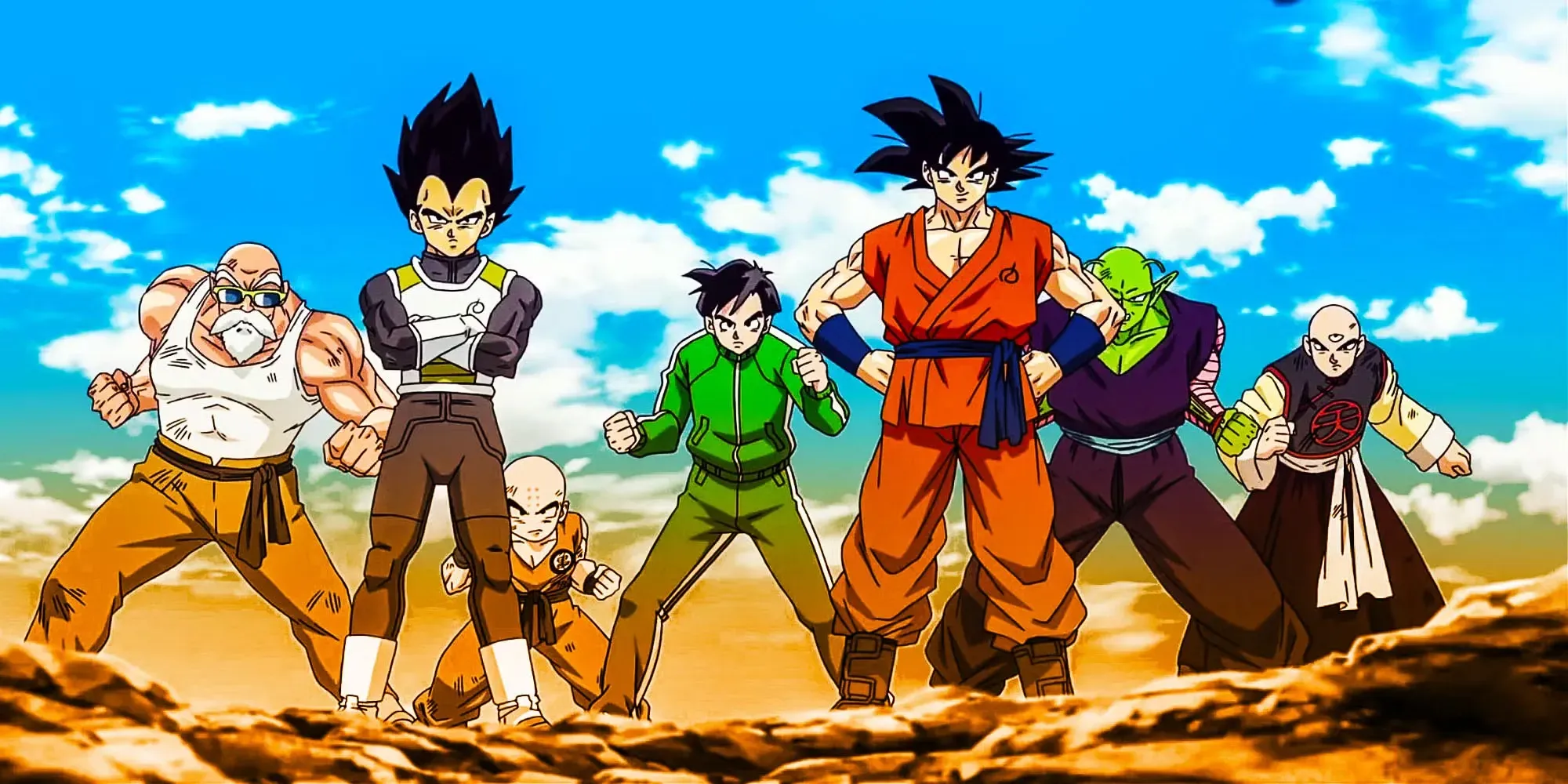

Dragon Ball Z Power Levels Debate Explained
Few topics in anime fandom spark as much passion as the Dragon Ball Z power levels debate. Since the series first introduced numerical strength ratings during the Saiyan Saga, fans have endlessly argued over who is truly the strongest and whether the numbers even make sense anymore.
Power levels were originally a clever storytelling device used by Akira Toriyama to illustrate the enormous gap between warriors. But as Dragon Ball Z progressed, those neat little numbers spiraled into chaos, leaving fans with more questions than answers. This article dives deep into the controversy, the inconsistencies, and why this debate still rages decades later.
 Also ReadYuichi Nakamura as Loki in "ONE PIECE": Elbaf Edition OP by Aina The End
What Are Power Levels in Dragon Ball Z?
Power levels are numerical values assigned to characters in Dragon Ball Z to represent their fighting strength. They were introduced when Raditz arrived on Earth, using a device called a Scouter to measure the battle power of Goku, Piccolo, and others.
Early in the series, these numbers were straightforward. Raditz had a power level of around 1,200, while Goku and Piccolo hovered near 300–400 in their base forms. The simplicity made it easy for viewers to understand the stakes of each battle.
However, as Saiyans discovered transformations and characters trained at exponential rates, those once-tidy numbers became almost meaningless. By the Frieza Saga, power levels had already climbed into the millions, and Toriyama himself reportedly grew tired of them.
Why the Dragon Ball Z Power Levels Debate Never Ends
The core reason this debate persists is inconsistency. Toriyama stopped using official numbers after the Frieza Saga, leaving fans to fill the gaps with speculation. Guidebooks, video games, and supplementary material often contradict each other, making consensus nearly impossible.
 Also ReadOne Piece Chapter 1180 "Omen" Spoilers: Imu's God-Like Power Destroys Zoro & Sanji
Another driving factor is the emotional investment fans have in their favorite characters. Vegeta loyalists will argue he should be closer to Goku in strength, while Gohan fans insist his hidden potential makes him the strongest Saiyan. Without definitive canon numbers, every position has some room for justification.
Online communities on Reddit, YouTube, and dedicated Dragon Ball forums keep the fire burning by producing tier lists, scaling arguments, and detailed breakdowns of feats versus stated power levels.
The Biggest Power Level Inconsistencies
Several moments in Dragon Ball Z have fueled heated arguments among fans. Here are some of the most commonly cited inconsistencies:
- Farmer with a Shotgun – His power level of 5 implies that normal humans are almost insignificant, yet characters like Krillin and Yamcha started with similarly low numbers and became planet-level threats.
- Frieza’s Forms – Frieza suppressed his power to avoid destroying his own body, but the multipliers between his forms are never clearly explained.
- Trunks vs. Cell – Future Trunks achieved a bulky Super Saiyan form that was supposedly stronger than Cell in raw power, yet he lost because of the speed trade-off. This showed power levels alone do not determine battle outcomes.
- Gohan’s Decline – After the Cell Saga, Gohan stopped training and became significantly weaker, suggesting power levels are not permanent and can decay.
- Goku vs. Beerus – Early Dragon Ball Super suggested Super Saiyan God Goku was only a fraction of Beerus’s strength, yet later arcs imply Goku has nearly closed the gap.
Do Power Levels Still Matter in Dragon Ball?
The honest answer is: not really, at least not as precise numbers. Modern Dragon Ball storytelling relies more on narrative context and dramatic tension than mathematical scaling. Toriyama and the current creative team use transformations and new techniques to convey strength rather than assigning explicit values.
That said, relative power scaling still matters to the fandom. Fans want to know if Ultra Instinct Goku can defeat Beerus, or how Broly compares to Jiren. The debate has simply evolved from arguing exact numbers to analyzing feats, statements, and scaling chains.
Video games like Dragon Ball FighterZ and Xenoverse assign their own stats, which often reignite the conversation by placing characters in unexpected tiers.
How Fans Approach the Power Scaling Argument
The Dragon Ball Z community has developed several informal methods for debating power levels:
- Feat-Based Scaling – Judging a character’s strength by what they actually accomplish on screen, such as destroying planets or tanking specific attacks.
- Statement Scaling – Using dialogue from the anime or manga where characters comment on each other’s power.
- Guidebook References – Citing Daizenshuu, V-Jump, and other official publications for numerical data, although these are often outdated or contradictory.
- Multiplier Logic – Applying known transformation multipliers (Super Saiyan = 50x base) to estimate power at higher forms.
The Cultural Impact of Power Level Debates
The Dragon Ball Z power levels debate has transcended the anime community. The phrase “It’s over 9,000!” became one of the most iconic memes in internet history, symbolizing any situation where something exceeds expectations.
Beyond memes, power scaling culture has influenced how fans discuss strength in other anime like Naruto, One Piece, and My Hero Academia. The template that Dragon Ball Z created—measuring characters on a numerical scale and debating the results—is now a universal part of anime fandom.
Content creators on YouTube have built entire channels around power scaling, generating millions of views and fostering an ongoing conversation that keeps Dragon Ball Z relevant long after its original run.
Conclusion
The Dragon Ball Z power levels debate is unlikely to be settled anytime soon, and honestly, that is part of its charm. The ambiguity left behind by Toriyama gives fans the freedom to theorize, argue, and engage with the series on a deeper level.
Whether you believe power levels are a useful guide or a flawed relic of early Dragon Ball Z, one thing is certain: few anime concepts have generated as much passionate discussion. The debate is not just about numbers—it is about the love fans have for these characters and the stories they tell.























// Comments