Introduction: The Shonen Hero Who Broke Bad
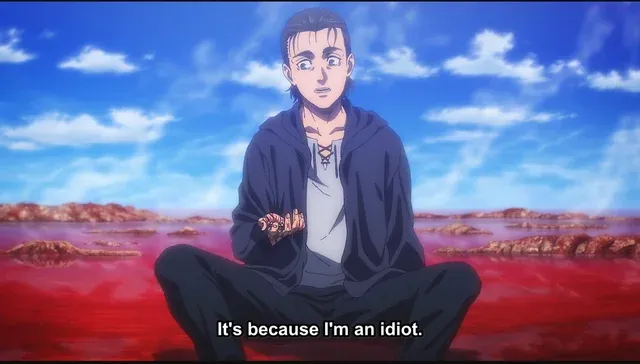
Eren Yeager begins his story as the quintessential shonen protagonist: loud, determined, and driven by a righteous desire to protect his friends. His goal—"I’ll kill them all! Every last one of them!"—feels justified when the targets are mindless, man-eating monsters.
But Attack on Titan is not a story about killing monsters; it is a story about becoming them. By the final season, Eren transforms from the series' hero into its terrifying final boss. This shift isn't sudden; it is a slow, agonizing erosion of humanity caused by trauma, determinism, and the cruel weight of the truth.
1. The Victim: Rage Born from Powerlessness
In the beginning, Eren’s rage is a defense mechanism against his own weakness. Watching his mother get eaten by a Titan instilled a binary worldview: Titans are evil, Humans are good.
His drive for "Freedom" was simple: Freedom meant going outside the walls. At this stage, he is a sympathetic victim of war. His violence is reactionary. He kills to survive. The audience cheers for him because his anger aligns with our moral compass—we want the monsters dead, too.
 Also ReadMost Viewed Anime of All Time?
2. The Disillusionment: The Basement Reveal
The turning point of Eren’s psyche occurs when he kisses Historia’s hand and unlocks the memories of the future (via the Attack Titan). He learns the truth in the basement: Humanity is not extinct. Humanity is the enemy.
This shatters his worldview. The "monsters" across the sea are just people—civilians, children, and victims of propaganda, just like him.
- The Ocean Scene: When the scouts finally reach the sea, everyone rejoices. Eren, however, points across the water with dead eyes and asks, "If we kill all our enemies over there... will we finally be free?" This is the moment the hero dies, and the antagonist is born.
3. The Cold Calculator: The Raid on Liberio
Post-timeskip Eren (Season 4) is unrecognizable. He is calm, stoic, and ruthless. He orchestrates the raid on Liberio, killing innocent civilians and forcing his friends into battle.
- The Mask: He pushes Mikasa and Armin away, calling Mikasa a slave and beating Armin. This cruelty was a calculated move to detach them from him, so they would be willing to kill him later.
- The Role Reversal: In a brilliant narrative flip, Eren becomes the "Titan" attacking the innocent city (Marley), mirroring the Colossal Titan attacking his home in Episode 1. He becomes the very terror he swore to destroy.
4. The Slave to Freedom: The Rumbling
The ultimate tragedy of Eren Yeager is the paradox of his "Freedom." To save Paradis Island, he initiates the Rumbling—a global genocide to wipe out all life outside the walls.
 Also ReadMikasa Ackerman's Fate: What Happened After the Final War?
However, it is revealed that Eren is not acting out of free will; he is acting out of fatalism. The Attack Titan exists to move forward, and Eren saw a future he could not change. He became a slave to his own destiny.
- The Child in the Clouds: In one of the most disturbing scenes, we see a child version of Eren cheering "Freedom!" while soaring above the clouds, oblivious to the fact that the "clouds" are the steam from millions of people being trampled to death below. It highlights his detachment from reality.
Conclusion
Eren Yeager is not a villain in the traditional sense, nor is he a hero. He is a cautionary tale about radicalization. He represents what happens when a victim of trauma gains the power of a god but keeps the emotional maturity of an angry child. He destroyed the world not because he wanted to rule it, but because the world wouldn't let him just live in it.










// Comments