Introduction: The Most Divisive Arc in Anime
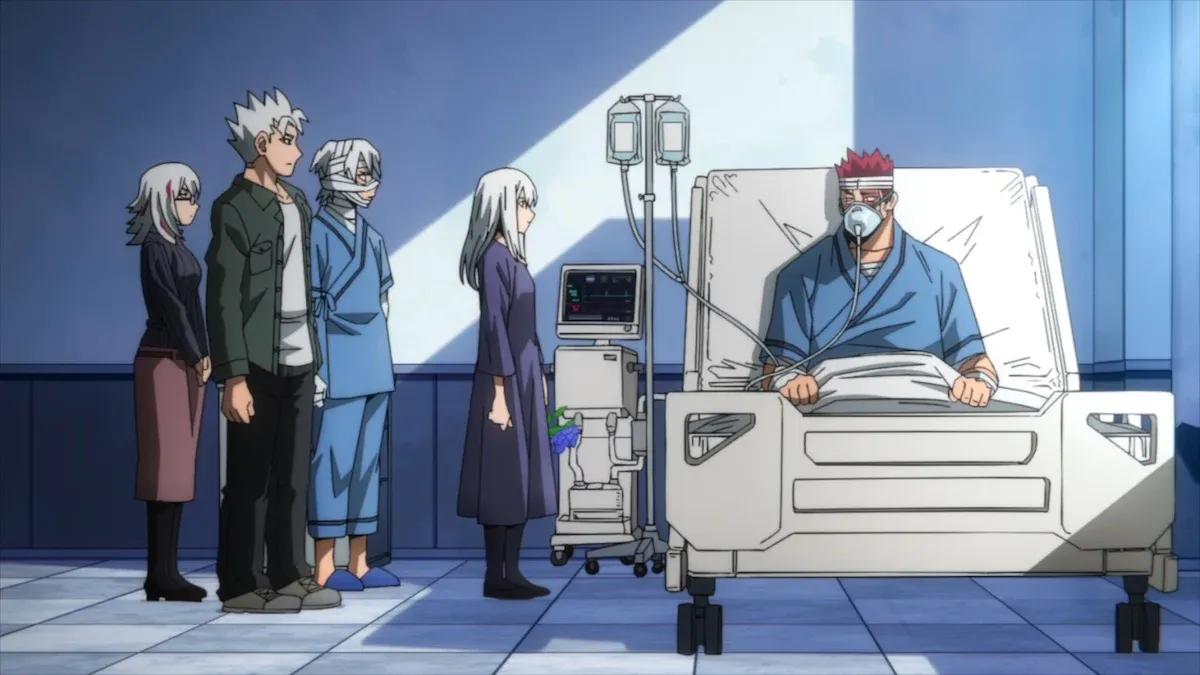
In the world of My Hero Academia, villains are usually defeated with a punch. But the villainy of Enji Todoroki (Endeavor) cannot be solved by fighting. It is a domestic horror story hidden behind the mask of the Number One Hero.
Endeavor’s arc is one of the most controversial and brilliantly written narratives in the genre because it asks an uncomfortable question: Does a monster deserve the chance to become a human being? The story of the Todoroki family is not about "forgiveness" in the traditional sense; it is about the agonizing, messy reality of atonement.
1. The Sin: Ambition Over Love
To understand the redemption, we must face the crime. Endeavor did not abuse his family out of alcoholism or chaotic rage; he did it with cold, calculated intent.
- Quirk Marriage: He treated his wife, Rei, not as a partner, but as a genetic broodmare to create a child with the perfect combination of Fire and Ice.
- The Discarded: He neglected his "failed" children (Fuyumi and Natsuo) and drove his eldest son, Touya, to madness and eventual "death."
- The Masterpiece: He physically and mentally tortured Shoto, isolating him from his siblings to forge the perfect hero.
This systematic dehumanization created a fractured home where the father was the villain, and the children were merely tools or failures.
 Also Read10 Strongest Electric Anime Lightning Wielders, Ranked
2. The Awakening: Number One by Default
The catalyst for Endeavor’s change wasn't a sudden burst of morality; it was the retirement of All Might. When Endeavor finally became the Number One Hero, he didn't feel accomplished. He felt hollow.
He realized that the symbol of peace stood for something he lacked: a heart. This existential crisis forced him to look at the wreckage of his personal life. He realized that being the strongest hero meant nothing if he was the weakest man.
3. Atonement vs. Forgiveness (The Natsuo Factor)
The brilliance of author Kohei Horikoshi’s writing lies in Natsuo Todoroki. While Fuyumi wants a happy family and Shoto wants to move forward, Natsuo represents the audience members who refuse to forgive.
Natsuo screams at his father, refusing to eat his food or accept his attempts at kindness. The narrative validates this. It does not force Natsuo to forgive Endeavor to create a "happy ending."
 Also Read10 Best Anime Characters With Green Hair & Green Dresses
- The Philosophy: Endeavor acknowledges this, stating: "I am not looking for forgiveness. I just want to atone." He builds a separate house for his family so they can live happily without him, proving he understands that his presence is the source of their pain.
4. The Ghost of the Past: Dabi’s Dance
Just as Endeavor begins to make progress, the narrative punishes him. The reveal that the villain Dabi is Touya Todoroki—his eldest son—is the physical manifestation of his past sins coming back to burn him.
Dabi is a mirror. He is Endeavor’s ambition stripped of the "Hero" title. When Dabi does his chaotic dance of reveal, he destroys Endeavor’s reputation, forcing the father to realize that he cannot just "move on." He created a monster, and now he must be the one to stop it—not as a hero saving the city, but as a father taking responsibility for his son.
Conclusion: A Joint Effort
Is Endeavor redeemed? The story suggests that redemption isn't a destination; it's a behavior. He will never erase the scars on Rei’s mind or Shoto’s face.
However, the conclusion of the arc is powerful because the family decides to share the burden. They do not forgive him, but they choose to help him stop Dabi. They step out of the victim role and choose to define the Todoroki legacy on their own terms. Endeavor proves that while you cannot un-break a plate, you can spend the rest of your life trying to keep the pieces from cutting anyone else.






// Comments