Introduction to the Shinjuku Showdown and Chapter 236
The Shinjuku Showdown stands as the most anticipated confrontation in the history of Jujutsu Kaisen, pitting the strongest sorcerer of the modern era against the undisputed King of Curses. This clash was not just a battle of physical prowess but a collision of two peak existences that defined the power scale of the JJK universe. For months, fans watched as Satoru Gojo and Ryomen Sukuna traded blows, domain expansions, and tactical maneuvers in a fight that pushed both to their absolute limits. However, the release of chapter 236 completely upended the narrative, delivering a conclusion that remains one of the most polarizing and discussed moments in manga history.
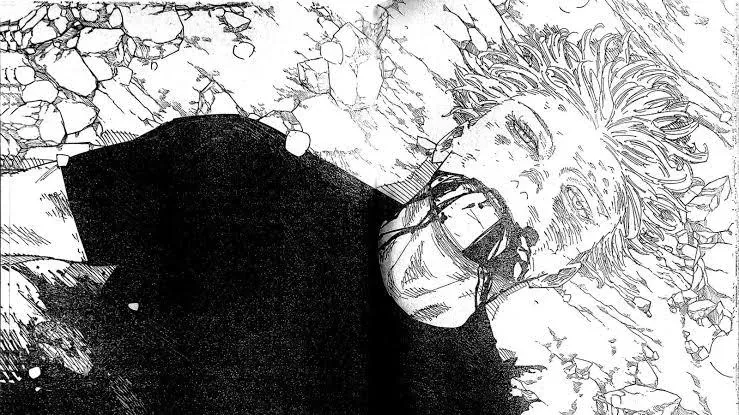
The Gojo death JJK fans witnessed was a staggering departure from the momentum of the previous chapter. While chapter 235 concluded with the declaration that "Gojo wins" after a devastating Hollow Purple, the following chapter opened with a sudden shift in reality. This narrative choice by Gege Akutami bypassed the physical blow itself, moving straight to the immediate aftermath and the spiritual transition of the world's most powerful sorcerer. The chapter serves as a definitive turning point, ending an era of perceived invincibility and setting the stage for the final desperate struggle against Sukuna.
 Also ReadSukuna's World-Cutting Slash Explained
The Shocking Outcome: Analysis of Sukuna's Victory
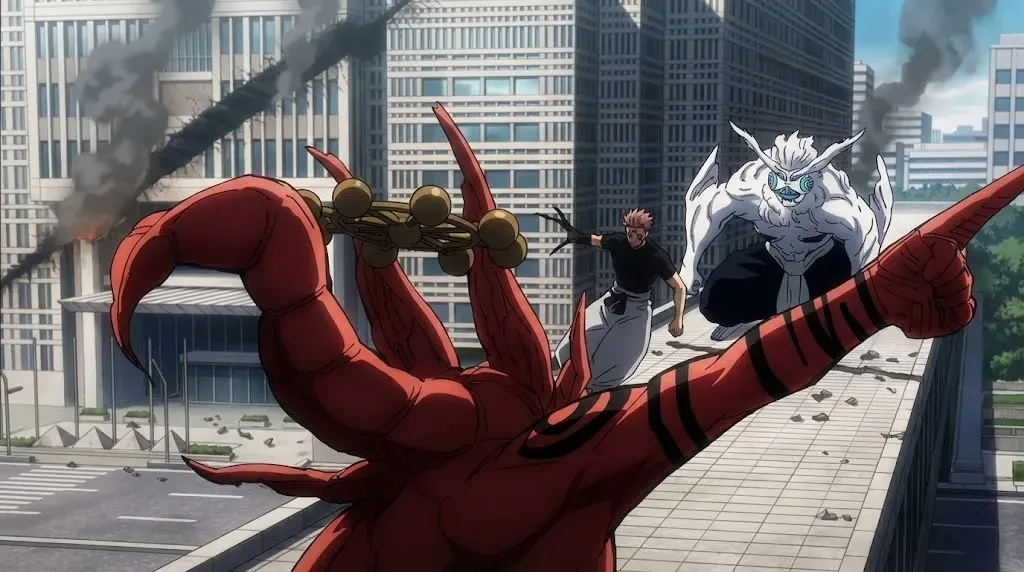
The Sukuna victory in the Shinjuku Showdown was achieved through a masterclass in adaptation and high-level sorcery logic. For the majority of the fight, Sukuna was forced onto the defensive, relying heavily on Megumi Fushiguro’s Ten Shadows Technique to find a bypass for Gojo’s Infinity. The key to this victory was Mahoraga, the divine general capable of adapting to any phenomena. Sukuna didn't just use Mahoraga to attack; he used it as a "manual" to learn how to evolve his own cursed technique, Dismantle.
By observing Mahoraga, Sukuna realized that he didn't need to target Satoru Gojo directly, which was impossible due to the Limitless technique. Instead, he targeted the very space, the world, and existence itself that Gojo occupied. This "World-Cutting Slash" effectively sliced through reality, rendering Gojo’s Infinity irrelevant. The shock of this outcome was intensified by the fact that it occurred off-screen, leaving readers to piece together the mechanics of the fatal blow alongside the fallen sorcerer. This victory solidified Sukuna as a transcendent threat who could learn and innovate even in the face of certain defeat.
The Afterlife Airport Scene: Satoru Gojo's Final Reflections
One of the most emotional and surreal elements of this narrative milestone is the afterlife airport scene. Before the manga shows Gojo’s bisected body in the physical world, it transports readers to a liminal space resembling an airport terminal. Here, a teenage version of Satoru Gojo reunites with the ghosts of his past, including Suguru Geto, Kento Nanami, Yu Haibara, and Principal Yaga. This setting is highly symbolic, representing a "waiting room" where souls decide whether to go North to start anew or South to return to their former selves.
In these final reflections, Gojo’s character is humanized in a way rarely seen during his life. He expresses a sense of relief and satisfaction, admitting that he gave everything he had against a stronger opponent. The conversation highlights several key points about Gojo's perspective:
 Also ReadThe Mahoraga Ritual Rules Explained
- His loneliness as "the strongest" and his desire to reach Sukuna's level of isolation.
- The admission that Sukuna might have won even without the Ten Shadows Technique.
- The regret that he couldn't make Sukuna go "all out" or give him the same satisfaction Gojo felt.
- His final farewell to his friends, signifying the end of his journey as a human being rather than just a weapon of jujutsu society.
Impact of Gojo's Death on the JJK World
The Gojo death JJK timeline experienced shifted the entire power dynamic of the series. Satoru Gojo was the pillar that held the jujutsu world together; his birth alone had altered the balance of nature, forcing curses to become stronger just to exist. With his removal from the board, the remaining sorcerers—Yuji Itadori, Yuta Okkotsu, Maki Zenin, and others—were suddenly thrust into a world without their ultimate safety net. The psychological blow to the students and allies was immense, as they had to witness the death of the man they believed to be unbeatable.
Beyond the emotional impact, the practical consequences were dire. Sukuna, now possessing the World-Cutting Slash and having regained his true Heian form, became an almost insurmountable obstacle. The "Gojo-less" world meant that the sorcerers had to rely on complex teamwork, unconventional binding vows, and the rapid growth of Yuji Itadori to stand even a remote chance. Gojo’s death forced the next generation to step out of his shadow and prove that they had inherited his will and his strength.
Final Breakdown of the Iconic Moment
The conclusion of chapter 236 remains an iconic moment because it challenged the conventions of the shonen genre. Usually, a protagonist's mentor dies in a heroic, visible sacrifice; Gojo's death was brutal, sudden, and initially confusing. By focusing on the spiritual transition in the afterlife airport, Gege Akutami prioritized character closure over the spectacle of the killing blow. This choice emphasized that even for the "strongest," death is a deeply personal and human experience.
Ultimately, the Sukuna victory served to elevate the stakes for the finale of Jujutsu Kaisen. It proved that in the world of JJK, no one is safe, and victory often comes at a devastating cost. Satoru Gojo's end was tragic, yet he died without the "regrets" typical of many sorcerers, having finally found an equal in battle. As the story moves forward, the image of Gojo in the airport stands as a reminder of the era of the "Strongest" and the beginning of the era of the "Future."
















// Comments