

Introduction to Jujutsu Kaisen Barrier Techniques
In the world of Jujutsu Kaisen, barrier techniques represent one of the most sophisticated applications of cursed energy. These techniques allow sorcerers and cursed spirits to manipulate space, creating isolated environments for protection, concealment, or combat. Among these, the Domain Expansion stands as the pinnacle of jujutsu, where a user realizes their innate domain through a barrier. While most practitioners rely on traditional structures, the evolution of JJK barrier techniques has revealed a profound distinction between standard methods and the god-like feat of manifesting a domain without a shell.
 Also ReadSukuna's World-Cutting Slash Explained
Defining Closed Barrier Domains: The Standard Procedure
A closed barrier domain is the standard form of Domain Expansion. In this procedure, the user creates a spherical "black box" that separates the interior space from the outside world. This barrier serves two primary purposes: it traps the opponent inside and provides the necessary medium to imbue the user's cursed technique. Because the space is sealed, the user can easily manifest their "sure-hit" effect. However, these barriers are often fragile from the outside and have a finite internal volume, making them susceptible to external interference or being overwhelmed by a more refined domain.
The Mastery of Open Barrier Domains
Open barrier domains are an extraordinary anomaly in the jujutsu world, often described as an artist painting on air without a canvas. Instead of sealing a space with a physical shell, the user manifests their innate domain directly into reality. This requires a level of cursed energy manipulation that almost no sorcerer can achieve. By not utilizing a closed shell, the user allows an escape route for the opponent, which acts as a Binding Vow. This vow significantly increases the domain's effective range and potency, making open barrier domains the ultimate symbol of sorcery mastery.
 Also ReadThe Mahoraga Ritual Rules Explained
Case Study: Sukuna’s Malevolent Shrine
Ryomen Sukuna’s Malevolent Shrine is the most famous example of an open barrier domain. Unlike others, Sukuna does not create a separate dimension; his shrine appears in the physical world, surrounded by a vast radius of destruction reaching up to 200 meters. Because it lacks a barrier to break, opponents cannot escape by shattering a shell. Instead, everything within its radius is subjected to a relentless barrage of Cleave and Dismantle. The divine nature of Malevolent Shrine lies in its ability to interact with the environment without being confined, allowing Sukuna to shred entire city blocks in seconds.
Case Study: Kenjaku’s Womb Profusion
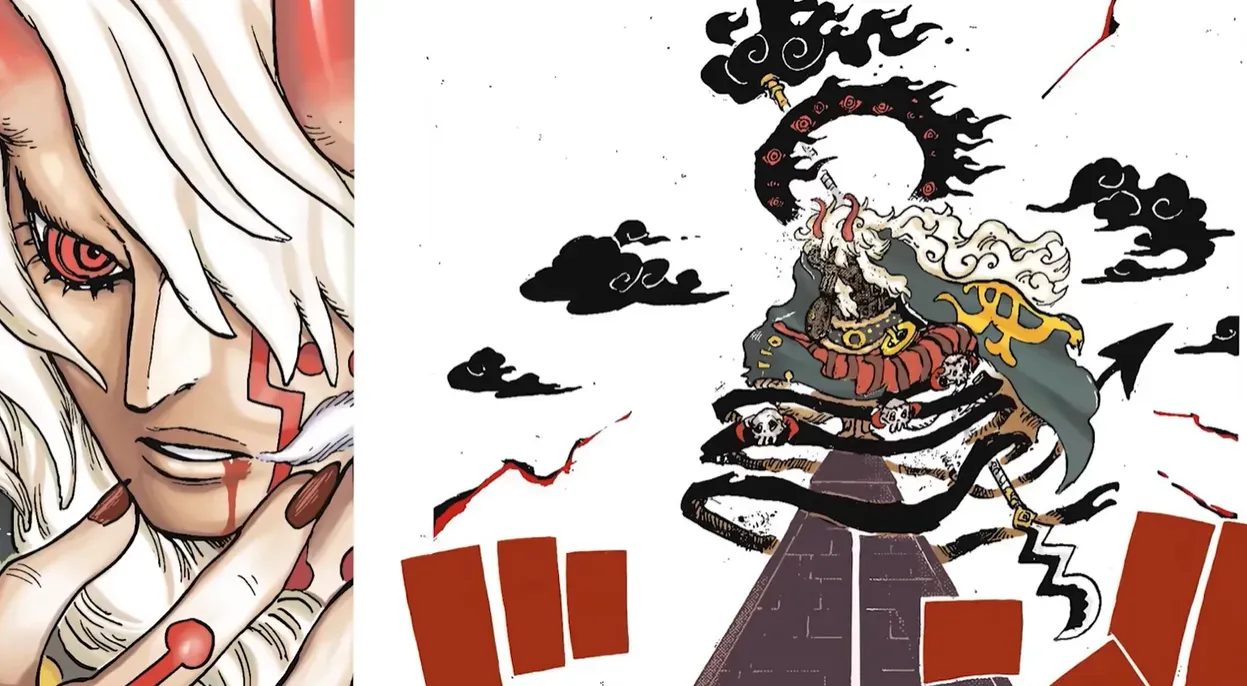
The ancient sorcerer Kenjaku also possesses the rare ability to utilize open barrier domains. His domain, Womb Profusion, manifests as a towering pillar of distorted cursed spirits and faces. Similar to Sukuna, Kenjaku’s technique is painted directly onto the world. During his battle against Yuki Tsukumo, the lack of a barrier proved to be a decisive advantage. Because there was no outer shell for Yuki to target or for a Simple Domain to easily nullify, Womb Profusion was able to exert immediate and overwhelming pressure on the surrounding space, demonstrating that Kenjaku’s mastery of JJK barrier techniques rivals that of the King of Curses.
Key Differences: Range, Binding Vows, and Lethality
The differences between open and closed barriers are defined by several critical factors:
- Range: Closed domains are limited by the size of their barrier. Open domains utilize a Binding Vow that trades the "sealed" aspect for a massive increase in area, often spanning hundreds of meters.
- Binding Vows: The inherent "flaw" of an open domain—allowing an escape route—is a powerful vow that boosts the sure-hit effect's lethality and reinforces the technique against other domains.
- Sure-Hit Mechanics: In a closed domain, the sure-hit is trapped. In an open domain, the sure-hit permeates the entire physical area, making it nearly impossible to outrun before being caught in the technique.
Strategic Advantages in Sorcery Battles
In a clash of domains, an open barrier domain holds a massive strategic advantage. When a closed domain and an open domain overlap, the open domain's sure-hit can attack the closed domain's barrier from the outside. Since standard barriers are designed to be strong on the inside but weak on the outside, a user like Sukuna can easily collapse an opponent's domain by destroying its foundation from the exterior. This makes the open barrier technique a "hard counter" to almost every other domain in existence.
Conclusion: The Pinnacle of Jujutsu Mastery
The distinction between open and closed barriers highlights the incredible depth of the Jujutsu Kaisen power system. While closed barriers are the hallmark of elite sorcerers, open barrier domains represent a level of existence that transcends human understanding. Mastering these JJK barrier techniques requires not just immense cursed energy, but a fundamental realization of how to impose one's soul upon the fabric of reality. Whether it is the terrifying radius of Malevolent Shrine or the complex architecture of Womb Profusion, these open domains remain the undisputed peak of jujutsu combat.























// Comments