Introduction
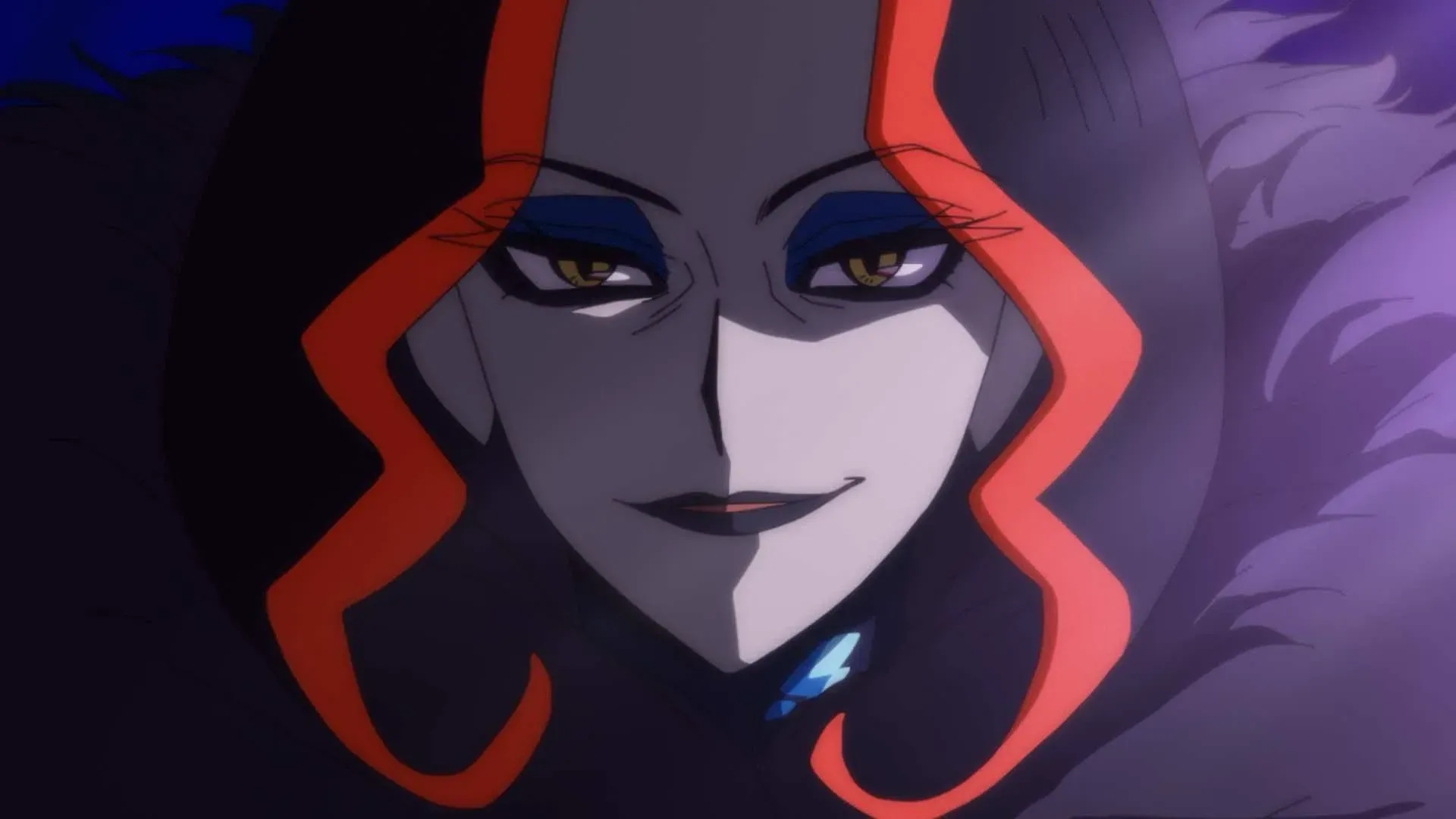
Every version of The Little Mermaid needs a sea witch, and Goodbye, Lara has one of the strangest in recent anime. Her name is Grace, she is voiced by Rica Fukami, and she is not a stranger who ambushed a naive princess — she is Lara's own aunt.
Kinema Citrus built its 15th anniversary original around a question Hans Christian Andersen never answered: what happens after the mermaid dissolves into foam? Two hundred years later, Lara wakes up in Lake Biwa with a second chance, and the witch who arguably killed her is still there, still involved, and now living in a goldfish bowl on a Shiga windowsill.
This is a full breakdown of Grace — what she wants, why she targeted Lara, where she actually lives, and what she can do. If you want the wider story and cast first, start with our Goodbye, Lara story and characters explainer.
 Also ReadGoodbye, Lara Anime: Story, Characters & Full Explainer
 Who Is Grace in Goodbye, Lara?

Grace is a powerful sea witch and the aunt of Lara, Lisa, and their sisters — which makes her the sister-in-law or sister of Sea King Rowan, and part of the royal bloodline she was thrown out of.
She was exiled from the mermaid kingdom for defying its laws. That exile is the single most important fact about her. Every strange decision she makes later is easier to read once you remember she was cast out by the same throne that later had to beg her for help.
Her official description flags one defining trait: a deep hatred of authority. That reframes the entire potion scene. Handing a transformation potion to the king's favourite daughter was not just a cruel trick played on a teenager — it was an attack on a king, aimed at the institution that banished her, using the one thing Rowan could not replace.
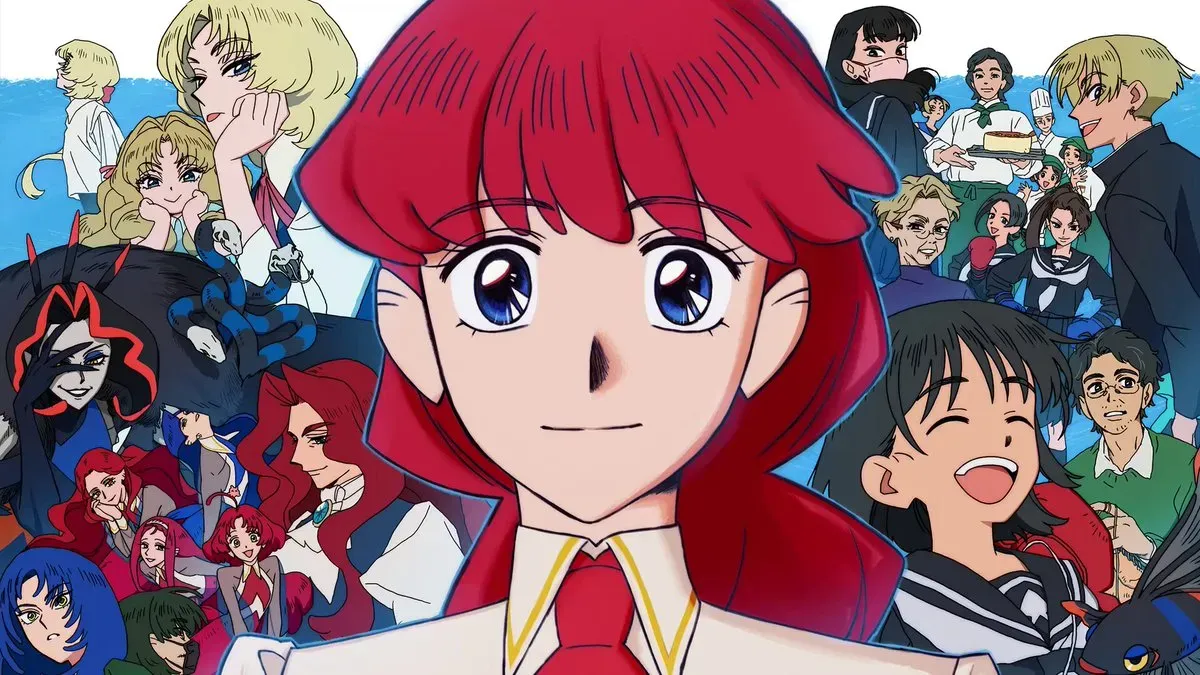 Also ReadGoodbye, Lara: Who Is Lara? Character & Story Explained
Grace's Mission: What Does She Actually Want?
The show has deliberately kept this ambiguous for nine episodes, and that ambiguity is the point. There are three readings currently supported by the anime, and the series has not fully committed to any of them.
Reading 1: Revenge on the throne
The simplest interpretation. Grace was exiled by the mermaid kingdom, resents its authority, and struck back through Lara. Unlike most versions of this fairy tale — where the desperate princess seeks out the witch — Grace goes to Lara. She finds her while Rowan has her locked away as punishment, and she talks her into the deal. That is the behaviour of someone hunting an opportunity, not someone running a shop.
Reading 2: She saw the collapse coming
The more interesting reading, and the one several critics have argued for since the first arc. There are hints that Grace sent Lara to the surface on purpose — not out of malice, but because she knew something was coming for the merfolk, and Lara's fascination with humans might be the only thing capable of saving them. If that is true, she is not a wicked witch. She is the only person in the kingdom who was paying attention.
The evidence for this is what she does after the disaster. When Lara's light disappeared and the kingdom died with it, Grace did not gloat. She led the surviving merfolk to a new land and put them into a deep sleep so they could survive without the light. A pure revenge plot has no reason to include a rescue operation.
Reading 3: She wants to watch
The coldest possibility, and the one that keeps her genuinely unsettling. Grace treats Lara's second attempt like a spectator sport, openly commenting on wanting to see how the story ends. Even if she saves lives along the way, she is fascinated by the shape of the tragedy itself. Kind actions and cruel curiosity are not mutually exclusive, and Goodbye, Lara refuses to let you pick just one.
Why Did Grace Do All This to Lara?


The chain of events runs like this.
She found Lara at her lowest point. Lara was fifteen, had just broken the kingdom's greatest taboo by saving a drowning human prince, and had been locked up by her father as punishment. Grace appeared in that cell.
She offered a deal, not a rescue. Human legs in exchange for Lara's voice — with the condition that if Lara failed to win true love, she would dissolve into sea foam. Lara took it. Grace said "Goodbye, Lara" and let her go, which is where the title comes from.
She knew what Lara was. This is the part that makes Grace hard to forgive. Mermaid princesses carry an inner light that sustains the kingdom, and Lara's light was special — inherited from her mother. Removing Lara did not just cost the throne a daughter. It extinguished the light that kept the city alive, forced the merfolk to abandon their home, and left them dormant and sealed inside shells. Whether Grace intended that outcome or merely accepted it is still an open question.
She is now running the second attempt. After Rowan gave up much of his own light to slowly revive Lara from foam, Lara woke in a ruined underwater fortress. Grace revealed her people were still alive, only sleeping, and proposed a trial: return to the surface, this time in modern Japan, and find true love for real. Succeed, and the kingdom can be restored.
Notably, the original price has already been paid. Lara does not lose her voice again — she carries a visible scar on her tongue instead, proof that debt was settled two centuries ago.
Where Does Grace Live?
Two answers, and both are correct.
Her mansion. Grace owns a mansion away from the mermaid kingdom, and it is where the surviving merfolk were taken to enter suspended animation. It functions as the story's tomb and vault at once. One of the show's biggest unanswered questions is how Lisa — Lara's older sister — became human and ended up in control of that mansion.
A goldfish bowl in Ōtsu. In the present day, Grace exists as a small fish called Gon-chan, the pet of high schooler Mari Otsu. Mari found her half-dead by the side of the road, miles inland, and saved her — which is why Grace tolerates Mari at all, though it never stops the sarcasm. The mansion and the merfolk are in Shiga Prefecture, the same region as Lake Biwa where Lara was reborn.
The visual of a legendary sea witch dispensing cryptic advice from a windowsill, while a boxing tournament and school life go on around her, is one of the reasons the show works.
Grace's Powers and Abilities
Here is everything the anime has actually shown, rather than what fans assume.
- Potion craft. Her signature ability. She created the human-transformation potion, with its foam clause built in. Her potions are potent enough that when Kota stole what remained of them, he used them to turn himself and Lisa human.
- Transformation and curses. She turned a mermaid princess into a human and bound her life to a condition. This is contract magic more than combat magic — she does not fight, she structures deals.
- Mass preservation. She sealed an entire surviving population inside shells in dormancy and kept them alive for two hundred years without their light source. This is comfortably her largest feat.
- Foresight. Magic mirrors in her domain reveal the fate of the kingdom, and her behaviour suggests she knew about the collapse before anyone else did.
- Shapeshifting or possession. She currently inhabits the form of a fish, and can speak and observe through it — letting her monitor Lara from inside a human household.
Her biggest limitation: she appears to be depowered. As Gon-chan she never uses her magic and has to rely on Mari or Lara to do anything physical for her. A fan comparison sums her up as a witch with all her memories and none of her power. Why she ended up in this state, stranded far inland and near death, has not been explained.
Is Grace Really the Villain?

Structurally, yes — she is the antagonist, she set the curse, and the kingdom fell because of a deal she engineered. Thematically, the show keeps pulling her back toward grey. She does not seem to want Lara to suffer. She saved the survivors. She gave Lara a second chance nobody was owed.
The most honest description is that Grace is the villain of the fairy tale and something closer to a difficult guardian in the anime. With three episodes left in the twelve-episode run, the finale will likely decide which one the series wants her to be.
Conclusion
Grace is the best rewrite in Goodbye, Lara. Andersen's sea witch was a plot device — a price to be paid on the way to a tragedy. Kinema Citrus turned her into an exiled aunt with a grudge against a throne, a possible prophecy nobody believed, and a rescue mission she carried out alone while everyone assumed she was the monster.
She cursed Lara. She also kept Lara's family alive for two hundred years. Until the final episodes air, the show is content to let both of those things be true at once — and that is exactly why she is worth arguing about.
storyline she lives in Ōtsu as Gon-chan, a pet fish belonging to Mari Otsu, who rescued her.
Is Grace the same as the sea witch Ursula? No. Ursula is Disney's character from their adaptation of The Little Mermaid. Grace is an original creation for Goodbye, Lara, based on Andersen's unnamed sea witch, and is written as Lara's aunt with far more ambiguous motives.
Why is Grace a fish now? The anime has not explained it. She was found half-dead by the roadside miles inland by Mari, who saved her, and she has been stuck in that form ever since — with her memories intact but her powers gone. It is one of the series' major unresolved mysteries.
Does Grace want Lara to succeed? It is genuinely unclear. She set up the trial that gave Lara a second chance and saved the surviving merfolk, but she also watches Lara's struggle with detached curiosity and openly wonders how it will end.














// Comments