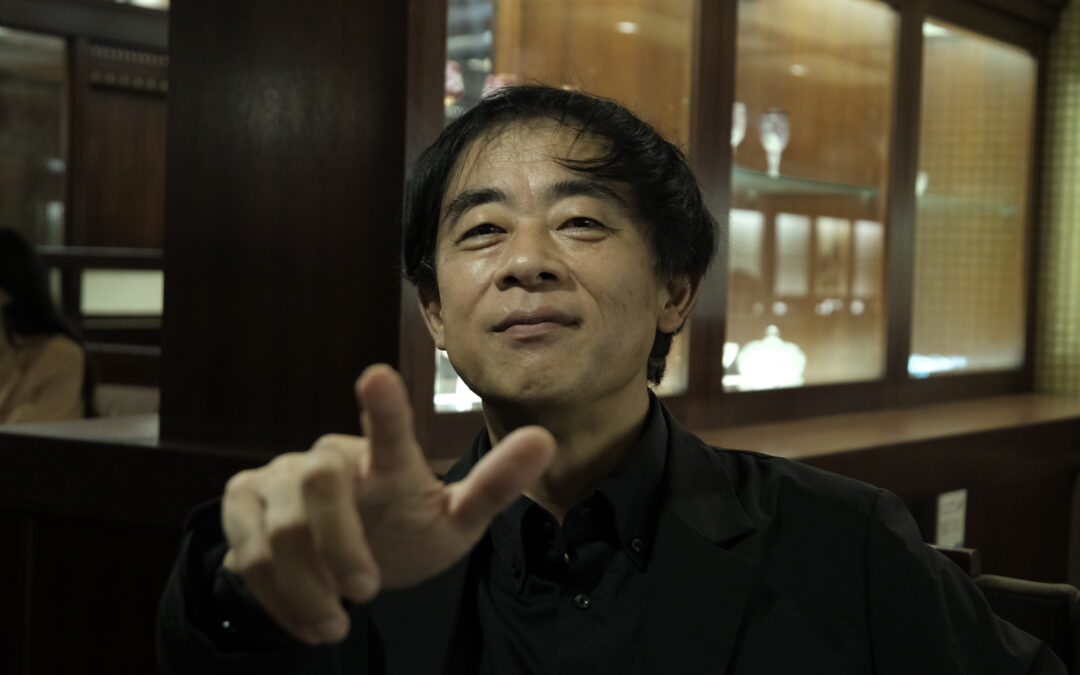

Introduction to Goro Taniguchi
In the vast landscape of Japanese animation, few names command as much respect as Goro Taniguchi. As a legendary anime director, writer, and producer, Taniguchi has been the creative force behind some of the most influential series of the 21st century. Best known as the iconic Code Geass director, he has built a reputation for blending high-concept science fiction with complex political drama and intense character studies. Whether he is working on original stories or massive franchise expansions, his unique directorial voice remains one of the most distinct among Sunrise anime directors. This article explores his journey from his early beginnings to his recent triumphs, including his role as the One Piece Film Red director.
 Also ReadYuichi Nakamura as Loki in "ONE PIECE": Elbaf Edition OP by Aina The End
Early Life and Goro Taniguchi Biography
According to any comprehensive Goro Taniguchi biography, the director was born on October 18, 1966, in Nisshin, Aichi Prefecture, Japan. Interestingly, Taniguchi did not initially set out to be an animator; he originally harbored ambitions of becoming an actor. However, his path led him to the Japan Institute of the Moving Image, where he honed his craft in filmmaking. He began his professional career as a production manager at J.C.Staff before eventually finding his home at Sunrise (now Bandai Namco Filmworks). His early work involved serving as an assistant director and storyboard artist on various projects, such as After War Gundam X, where he learned the intricacies of managing large-scale mecha productions.
Directorial Breakthrough with Code Geass

While Taniguchi had already directed well-received series like Infinite Ryvius and s-CRY-ed, his global breakthrough came in 2006 with the premiere of Code Geass: Lelouch of the Rebellion. As the Code Geass director, Taniguchi collaborated with the manga artist collective CLAMP for character designs and writer Ichiro Okouchi to create a masterpiece of "picaresque" storytelling. The series, which follows the exiled prince Lelouch vi Britannia as he attempts to topple an empire, became a cultural phenomenon. Taniguchi's ability to balance bombastic mecha battles with intricate tactical mind games solidified his status as a visionary. The success of the franchise led to several sequels, including Code Geass: Lelouch of the Re;surrection in 2019, ensuring his legacy was tied to one of the most celebrated anime of all time.
 Also ReadOne Piece Chapter 1180 "Omen" Spoilers: Imu's God-Like Power Destroys Zoro & Sanji
One Piece Film Red and Modern Success

In recent years, Taniguchi has reached a new pinnacle of commercial and critical success as the One Piece Film Red director. Released in 2022, the film became one of the highest-grossing Japanese films in history. This project was a homecoming for Taniguchi, who actually directed the very first One Piece animated project, the 1998 OVA "Defeat The Pirate Ganzak\!," even before the television series began. Under his leadership, One Piece Film Red introduced the character Uta and blended musical elements with traditional shonen action, proving that Taniguchi could innovate within established franchises while still respecting their core appeal.
Complete Goro Taniguchi Anime List
For those looking to dive into his filmography, the Goro Taniguchi anime list is extensive and diverse, spanning multiple decades and genres. Key works include:
- One Piece: Defeat The Pirate Ganzak\! (1998)
- Infinite Ryvius (1999)
- s-CRY-ed (2001)
- Planetes (2003)
- Gun x Sword (2005)
- Code Geass: Lelouch of the Rebellion (2006–2008)
- Jungle Emperor: The Brave Can Change the Future (2009)
- Maria the Virgin Witch (2015)
- Active Raid (2016)
- ID-0 (2017)
- Revisions (2019)
- Back Arrow (2021)
- Skate-Leading Stars (2021)
- One Piece Film: Red (2022)
- Bloody Escape (2024)
- Paris ni Saku Etoile (2026)
Career at Sunrise and Collaborations
Goro Taniguchi is often cited as one of the most prominent Sunrise anime directors. His long-standing relationship with the studio allowed him to work within various creative "studios" under the Sunrise umbrella, collaborating with legendary producers and animators. His work is characterized by a "composing" mindset—the idea of creating original stories from scratch rather than simply adapting existing manga. He has frequently collaborated with writer Ichiro Okouchi, a partnership that proved essential for the success of Code Geass and Planetes. His ability to lead diverse teams at Sunrise has helped the studio maintain its reputation for high-quality science fiction and mecha content.
Insights from Goro Taniguchi Interviews
Searching for a Goro Taniguchi interview reveals a creator who is deeply concerned with the future of the anime industry. In recent press appearances for his 2026 film Paris ni Saku Etoile, Taniguchi warned that the industry risks becoming a "subcontracting business" if it relies too heavily on adaptations. He often compares directors who only do adaptations to "arrangers" and those who create original work to "composers." Taniguchi advocates for a balance where original productions can coexist with adaptations to ensure that new talent is attracted to the industry and creative "dreams" are kept alive. His outspoken nature regarding production committees and industry trends makes him a respected voice among peers and fans alike.
The Legacy of a Visionary Director
The legacy of Goro Taniguchi is defined by his commitment to original expression and narrative depth. From the hard sci-fi realism of Planetes to the operatic drama of Code Geass, he has consistently pushed the boundaries of what television anime can achieve. As he continues to release new projects like the Azuki anthology series and his original films, his influence remains undeniable. Taniguchi is not just a director; he is a storyteller who believes in the power of unique ideas to shape the world of animation for generations to come.












// Comments