
Unraveling the Myth: Did Vegeta Truly Promise Whis the God of Destruction Role?
For years, a popular misconception has circulated among Dragon Ball Super fans: that Vegeta, the Prince of all Saiyans, explicitly promised Whis he would become the next God of Destruction. This idea has been a persistent piece of lore, often cited in discussions about Vegeta's character arc and future power. However, the truth, when examined closely through the anime's own dialogue and context, paints a very different picture. It’s time to set the record straight and debunk this long-standing myth.
The Scene Everyone Remembers: Dragon Ball Super Episode 16
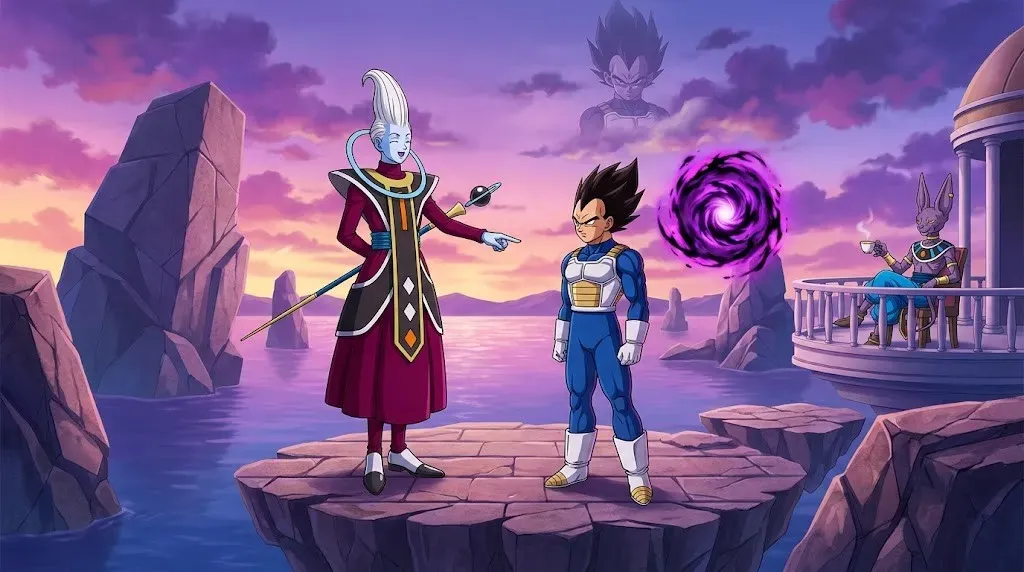
The moment people are thinking of is Dragon Ball Super episode 16. This episode almost entirely focuses on Vegeta trying to convince Whis to take him to Beerus's planet for training. After a series of comedic attempts to appeal to Whis's love for Earth's cuisine, Vegeta finally gets his wish. It's during this pivotal interaction that the misunderstanding began.
When he later finds out that Whis is Beerus's master, Vegeta, ever the driven warrior, asks Whis to train him. Whis, known for his eccentricities and strict conditions, says yes, but only if Vegeta becomes a God of Destruction. The common belief is that Vegeta agreed to this. Indeed, the scene plays out with Vegeta clearly frustrated by this, but he yells out "all right" and starts maniacally laughing. On the surface, it seemed like he agreed to become a God of Destruction.
"Vegeta already promised to be the next God of Destruction in order to train with Whis. Except, he didn't."
The Real Translation and Vegeta's True Intent
Here’s where the critical nuance lies. In reality though, Vegeta was saying "all right" to his last resort option of feeding Whis the best food on Earth. He was desperate to get to Beerus's planet and train, and offering gourmet food was his final, most effective plea. Other translations have the line as "in that case," which makes far more sense in the context of the scene, indicating a shift to his food-based persuasion rather than an acceptance of a divine role.
 Also ReadMost Viewed Anime of All Time?
This interpretation aligns perfectly with Vegeta's character at the time. While ambitious, the idea of sacrificing his warrior's path for a destructive, administrative role was likely not his primary goal for strength. His focus was on surpassing Goku and becoming stronger, not on taking on the mantle of a Destroyer God. For more on the specifics of the episode, you can check out the Dragon Ball Wiki's summary of DBS Episode 16.
Further Clarification in Episode 20
To double down on this, later on in episode 20 of Dragon Ball Super, the topic resurfaces, unequivocally clarifying Vegeta's (and Goku's) stance. Beerus directly asks both Goku and Vegeta if they're training to replace him as a God of Destruction. Both Saiyans deny wanting to take on that role and have their own reasons for seeking strength, which are distinctly different from the duties of a Destroyer God.
This conversation in episode 20 serves as definitive proof that Vegeta never truly promised to become a God of Destruction. His "all right" in episode 16 was a misinterpretation, exacerbated by an ambiguous translation and his own dramatic reaction. Their denial confirms that their training with Whis and Beerus was purely for personal power growth, not for succession. You can explore more about Whis and Beerus's roles on the Dragon Ball Wiki.
Who Could Replace Beerus?
But, that makes you wonder who could actually replace Beerus as the God of Destruction if the two most powerful Saiyans in Universe 7 aren't interested. This question opens up intriguing possibilities for future storylines and character introductions within the Dragon Ball universe. While Vegeta and Goku seek strength for personal reasons and to protect their universe, the role of a Destroyer God is a heavy burden, requiring a very specific temperament and commitment.
 Also ReadHow Anime Is Changing Generations Worldwide in 2026
The debunking of this popular myth not only clarifies a significant piece of Dragon Ball Super lore but also highlights the importance of accurate translations and contextual understanding in anime. Vegeta's journey is one of continuous growth and self-discovery, and while he trains under a God of Destruction, his path remains uniquely his own, focused on reaching new heights of power without the chains of divine responsibility. For official updates and news, always refer to the Dragon Ball Official Site.


























// Comments