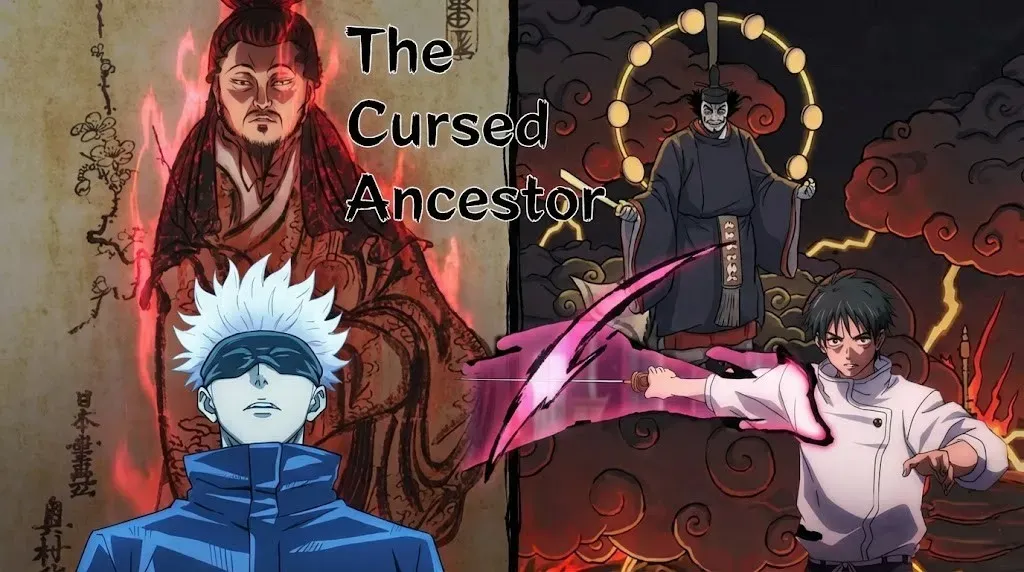

Introduction to Sugawara no Michizane
In the vast and intricate world of Jujutsu Kaisen, bloodlines often dictate the ceiling of a sorcerer's potential. While many fans focus on the modern-day clashes between Satoru Gojo and the disaster curses, the roots of these powers stretch back centuries into Japanese history and myth. At the heart of this ancestral power is Sugawara no Michizane, a legendary figure from the Heian Era who serves as the pivotal link between the series' most formidable protagonists. Sugawara no Michizane is not just a historical scholar and politician; in the JJK universe, he is one of the Three Great Vengeful Spirits of Japan, a title that carries immense weight in the hierarchy of cursed energy.
Understanding the legacy of Sugawara no Michizane is essential for grasping why certain characters possess such overwhelming strength. His influence permeates the series, acting as the foundation for the Gojo ancestry and the unexpected power found within the Yuta bloodline. By exploring this historical anchor, we uncover the secrets of how cursed energy is inherited and refined across generations, setting the stage for the legendary feats seen in the modern era.
 Also ReadSukuna's World-Cutting Slash Explained
The Legend of the Vengeful Spirit

To truly appreciate the impact of Sugawara no Michizane on Jujutsu Kaisen, one must first look at the real-world history and Vengeful Spirit lore that inspired Gege Akutami. Michizane was a brilliant scholar and high-ranking official who was unjustly exiled due to the machinations of his rivals, the Fujiwara clan. After his death in exile, Kyoto was plagued by a series of natural disasters, including devastating lightning strikes on the imperial palace. The people believed these calamities were the work of Michizane’s wrathful ghost, leading to his deification as Tenjin, the god of learning.
In the context of JJK, this transformation from a man into a Vengeful Spirit represents the absolute pinnacle of cursed energy manifestation. When a powerful sorcerer dies with a heart full of regret or malice, they can transcend the cycle of death to become a spirit of pure destruction. Sugawara no Michizane became so powerful that his very existence shifted the balance of the jujutsu world in the Heian Era, establishing a standard of power that would remain unmatched for a millennium. This Vengeful Spirit lore explains why his descendants are born with an innate capacity for jujutsu that far exceeds their peers.
Connecting the Bloodlines: Gojo and Yuta's Ancestry
One of the most shocking revelations in the series occurs during the events of Jujutsu Kaisen 0, where it is revealed that Satoru Gojo and Yuta Okkotsu share a common ancestor. This connection is none other than Sugawara no Michizane. While Satoru Gojo represents the direct, elite lineage of the Gojo clan, Yuta Okkotsu was initially thought to be an outsider with no ties to the jujutsu world. However, the revelation of the Yuta bloodline being linked to Michizane explained his nearly infinite pool of cursed energy and his ability to manifest the "Queen of Curses," Rika Orimoto.
 Also ReadThe Mahoraga Ritual Rules Explained
The Gojo ancestry has meticulously maintained its status as one of the Three Great Families by preserving the Limitless technique and the Six Eyes, both of which are believed to be refinements of the raw power inherited from Michizane. In contrast, Yuta’s branch of the family tree seemed to have gone dormant, only to resurface with explosive force in the modern era. This shared heritage makes Gojo and Yuta distant relatives, bound by the same ancient and volatile energy that once terrorized Kyoto. It highlights that the "strongest" are not just lucky individuals, but the products of a thousand-year-old spiritual legacy.
The Significance of Sugawara no Michizane in Jujutsu Kaisen
The presence of Sugawara no Michizane in the lore serves several critical functions in the narrative:
- Justification of Overwhelming Power: It provides a logical explanation for why Satoru Gojo and Yuta Okkotsu can perform feats that seem impossible to other Grade 1 and Special Grade sorcerers.
- The Three Great Families Lore: It cements the Gojo clan's position as a pillar of the jujutsu world, tracing their legitimacy back to a figure recognized by both history and myth.
- Themes of Inheritance: The series often explores the weight of the past. By linking the protagonists to a Vengeful Spirit, the story emphasizes that power is a double-edged sword that comes with historical burdens.
- World Building: Integrating real-world Japanese folklore like the Three Great Vengeful Spirits adds a layer of depth and realism to the supernatural elements of the series.
Without the foundational strength provided by Michizane, the modern sorcery world would lack the heavy-hitters necessary to combat the rising tide of disaster curses and the resurrection of Sukuna.
Conclusion: The Legacy of the Ancestor
Sugawara no Michizane remains one of the most important, albeit mostly unseen, figures in the world of Jujutsu Kaisen. As the common ancestor of the Gojo ancestry and the Yuta bloodline, his Vengeful Spirit lore provides the essential context for the series' power scale. His transformation from a wronged scholar into a divine force of nature mirrors the journey of many sorcerers who must navigate the fine line between humanity and the monstrous nature of cursed energy. By understanding the legacy of the ancestor, fans can better appreciate the depth of Satoru Gojo’s arrogance and Yuta Okkotsu’s humble yet terrifying potential. The shadow of Sugawara no Michizane continues to loom over the battlefield, proving that in the world of JJK, the past is never truly dead—it is simply waiting to be unleashed.





















// Comments