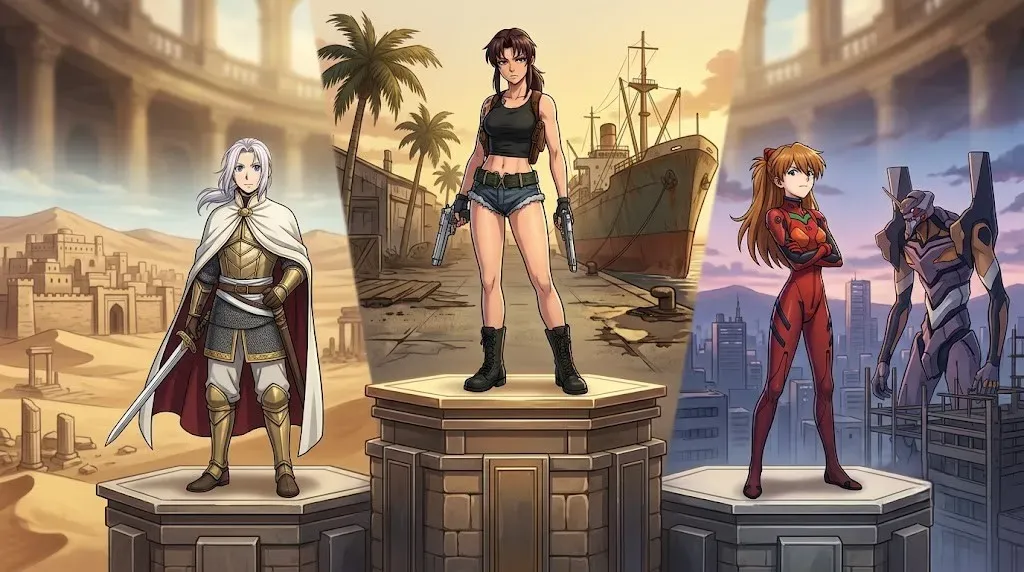
Introduction to Foreign Anime Protagonists
For decades, the medium of Japanese animation has been a window into the culture, mythology, and everyday life of Japan. However, as the industry has expanded into a global powerhouse, the narrative scope has shifted. Today, the concept of foreign anime protagonists has become a central theme in many of the most popular series, offering a fresh perspective on storytelling.
These characters bring with them unique cultural backgrounds, different moral compasses, and distinct visual designs that stand out in the crowded landscape of modern media. Whether they are Americans navigating the supernatural or Europeans caught in high-fantasy wars, these leads are redefining what it means to be a hero in the anime world.
In this guide, we explore the best foreign anime characters who have captured the hearts of fans worldwide. From gritty historical dramas to high-octane sci-fi adventures, these international legends prove that great storytelling knows no borders. As we look toward the trends of 2026, the inclusion of diverse anime nationalities is more relevant than ever.
 Also Read10 Best BL and Gay Anime on Crunchyroll, Ranked
Defining Foreign Characters in Japanese Animation
In the context of the industry, a foreign character is typically defined as any individual whose nationality is not Japanese. While many series are anime set outside Japan, the protagonists are often still culturally Japanese or coded as such. A true foreign protagonist is one whose identity is explicitly tied to another country or culture.
This distinction is important because it influences the character's dialogue, interactions, and personal philosophy. For example, a protagonist from the United States might approach a problem with a different set of social expectations than one from Germany or Brazil. This creates a fascinating dynamic when these characters interact with Japanese settings or tropes.
Historically, foreign characters were often relegated to sidekick roles or depicted as caricatures. However, modern creators are now focusing on authenticity. By researching specific cultural nuances, studios are able to create global anime influences that feel grounded and respectful rather than stereotypical.
The Growing Popularity of International Anime Leads
The rise of streaming platforms like Crunchyroll has played a massive role in the popularity of international anime leads. As the audience becomes more global, viewers are increasingly looking for characters that reflect their own backgrounds or offer a window into unfamiliar territories.
 Also Read10 Best Anime With No Fanservice, Ranked
This shift has encouraged Japanese studios to collaborate with international creators and animators. The result is a surge in Non-Japanese anime protagonists who feel like a natural evolution of the medium. These characters allow for stories that explore global issues, such as immigration, international espionage, and cross-cultural friendship.
Furthermore, the "isekai" genre has occasionally experimented with foreign leads being transported to other worlds, though the most impactful examples remain in grounded genres like crime thrillers and historical fiction. The demand for these stories is at an all-time high as we move into a more interconnected era of entertainment.
Criteria for Ranking the Best Foreign Protagonists
Ranking the best foreign anime protagonists requires looking beyond just their country of origin. We have evaluated these characters based on a specific set of criteria to ensure they represent the pinnacle of character writing and cultural representation.
Our ranking factors include:
- Narrative Impact: How central is their foreign identity to the plot and their personal growth?
- Cultural Authenticity: Does the character feel like a genuine representation of their stated nationality?
- Fan Popularity: How has the global community embraced the character since their debut?
- Legacy: Has the character influenced how other foreign leads are written in the years following their series?
Top 10 Best Foreign Anime Protagonists, Ranked
1. Edward Elric (Fullmetal Alchemist)

While the world of Amestris is fictional, it is heavily inspired by late 19th-century Europe, specifically Germany. Edward Elric is a quintessential foreign lead whose journey is defined by Western alchemical traditions and industrial aesthetics. His stubbornness and resilience have made him an icon of the medium.
2. Revy (Black Lagoon)

Revy, also known as Rebecca Lee, is a Chinese-American from New York City. She is the heart of Black Lagoon, a series famous for its diverse cast. Her perspective as an outsider in Southeast Asia, combined with her gritty "Two-Hand" combat style, makes her one of the most compelling international anime legends.
3. Johann Liebert (Monster)

As the primary antagonist who often drives the narrative like a protagonist, Johann is an ethnic German/Czech character. Monster is one of the premier examples of anime set outside Japan, taking place primarily in Germany and the Czech Republic. Johann’s chilling presence is a masterclass in psychological storytelling.
4. Thorfinn (Vinland Saga)
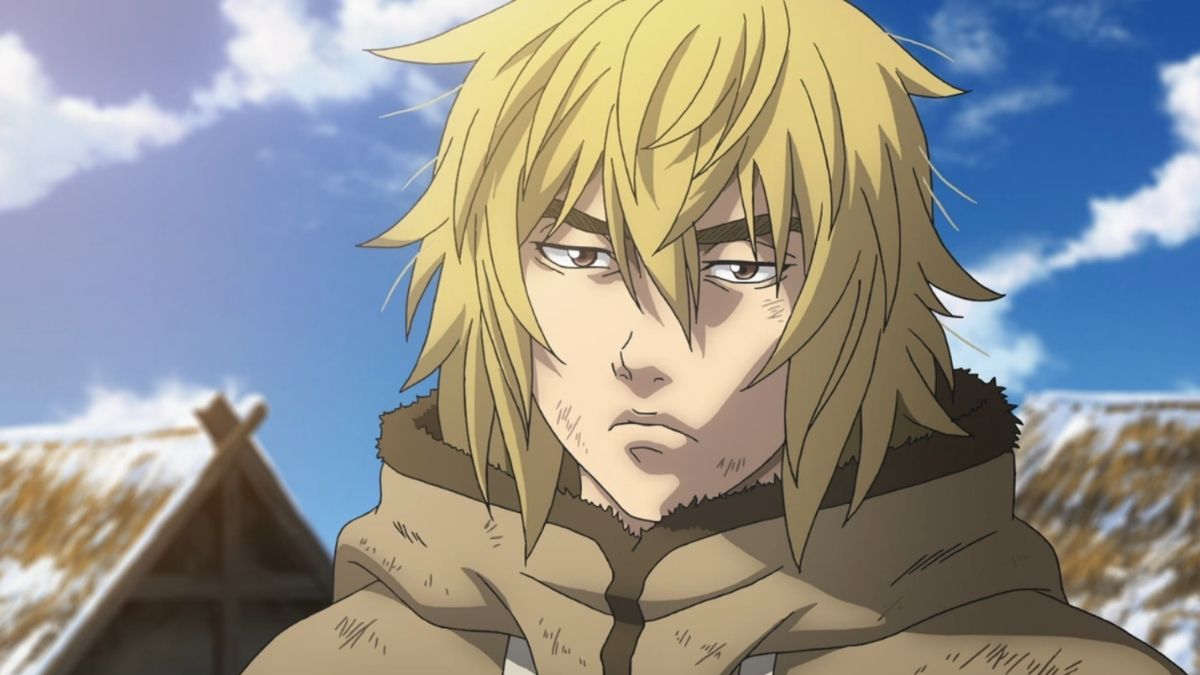
Thorfinn is an Icelander, and his story is a sweeping historical epic set across Northern Europe and North America. His transition from a vengeful warrior to a man seeking a land of peace (Vinland) is a profound exploration of Norse culture and universal human struggles.
5. Asuka Langley Soryu (Neon Genesis Evangelion)

Asuka is a German-American-Japanese character who spent most of her life in Germany. Her "foreignness" is a key part of her personality, often manifesting as a superiority complex used to mask deep-seated insecurities. She remains one of the most debated and popular foreign leads in history.
6. Spike Spiegel (Cowboy Bebop)

Though his background is intentionally mysterious, Spike is often associated with Mars, yet his design and Fighting style (Jeet Kune Do) draw heavily from Chinese and American noir influences. He embodies the "global" feel of the Cowboy Bebop universe, where nationalities have merged in the stars.
7. Ash Lynx (Banana Fish)

Ash Lynx is an American protagonist navigating the dark underworld of New York City. His character arc is deeply tied to American social issues and the trauma of the Vietnam War. He is a standout example of how anime can tackle complex, foreign-centric narratives with grace.
8. Michiko Malandro (Michiko & Hatchin)

Michiko is a Brazilian protagonist in a world heavily inspired by the culture and landscapes of Brazil. Her fiery personality and the show's vibrant Afro-Brazilian influences offer a refreshing departure from the standard anime setting, celebrating diverse anime nationalities.
9. Victor Nikiforov (Yuri on Ice)

While Yuri Katsuki is the main lead, Victor functions as a co-protagonist for much of the series. As a Russian figure skating legend, Victor brings a specific cultural flair and professional standard to the show, highlighting the international nature of competitive sports.
10. Arslan (The Heroic Legend of Arslan)

Based on Persian history and the epic Amir Arsalan, Arslan is a prince from the kingdom of Pars. His journey to reclaim his throne is steeped in Middle Eastern aesthetics and political philosophy, making him a unique and necessary voice in the genre.
Impact of Cultural Diversity on Anime Storytelling
The inclusion of foreign anime leads has a transformative effect on the industry's storytelling capabilities. By stepping away from the familiar streets of Tokyo or Kyoto, creators can explore different architectural styles, social hierarchies, and historical events. This variety prevents the medium from becoming stagnant.
Cultural diversity also introduces new types of conflict. Language barriers, differing religious beliefs, and clashing social norms provide a wealth of material for character development. When a protagonist has to navigate a world that doesn't share their baseline assumptions, it forces them—and the audience—to think more critically about the world.
Moreover, these characters serve as a bridge. For international fans, seeing a character from their own country depicted as a hero can be a powerful experience. It fosters a sense of global community and encourages more people to engage with Japanese art forms. You can find more on the history of international relations in media on Wikipedia.
Iconic Non-Japanese Characters Who Changed the Genre
There are certain characters whose presence was so impactful that they changed the way the industry views foreign leads. Characters like Revy from Black Lagoon proved that an international lead could carry a series that was both commercially successful and critically acclaimed without relying on traditional shonen tropes.
Similarly, the cast of Vinland Saga showed that Japanese creators could handle sensitive historical and cultural material from other nations with immense respect and accuracy. These characters paved the way for "prestige" anime that targets an adult, global audience. They shifted the focus from "mononaware" (the pathos of things) to a more varied range of emotional and philosophical expressions.
These icons have also influenced the "seiyuu" (voice acting) industry. It is now more common for voice actors to receive coaching for foreign accents or for studios to hire bilingual actors to ensure that the international flavor of the character is captured in the performance.
Why Representation Matters in Modern Shonen and Seinen
Representation is not just a buzzword; in the world of 2026 anime, it is an essential component of world-building. For Shonen (aimed at young males), diverse characters provide a wider range of role models. It teaches younger audiences that heroism is not limited to one specific culture or ethnicity.
In Seinen (aimed at adult males), representation allows for more sophisticated explorations of identity. A foreign protagonist in a Seinen series can be used to critique social systems, explore the feeling of alienation, or examine the complexities of globalization. These stories often resonate more deeply because they reflect the multi-cultural reality of the modern world.
By including Non-Japanese anime protagonists, creators can also avoid the "White Savior" trope often found in Western media. In anime, these characters are often just one part of a larger, interconnected world where everyone must work together despite their differences. This balanced approach to representation is what keeps the medium feeling fresh and progressive.
Conclusion: The Future of Global Protagonists in Anime
The legacy of foreign anime leads is one of growth and limitless potential. As we have seen with characters like Thorfinn, Revy, and Edward Elric, the most memorable heroes are often those who bring a unique cultural perspective to the table. These protagonists have expanded the boundaries of what is possible in Japanese animation.
Looking forward, we can expect to see even more diverse anime nationalities taking center stage. As technology makes collaboration easier and the global audience continues to grow, the distinction between "local" and "foreign" stories will likely blur. The future of anime is one where every fan, regardless of where they are from, can see themselves represented as the hero of their own story.
Whether it is through the lens of history, the lens of magic, or the lens of futuristic technology, international anime legends are here to stay. Their journeys remind us that while our cultures may differ, the core human experiences of love, loss, and the struggle for justice are truly universal. Many of these stories feature the smartest anime characters ever created, showing that intelligence and cultural awareness often go hand-in-hand.













// Comments